Simulating Life Paths with Digital Twins: AI-Generated Future Selves Influence Decision-Making and Expand Human Choice
作者: Rachel Poonsiriwong, Chayapatr Archiwaranguprok, Constanze Albrecht, Peggy Yin, Nattavudh Powdthavee, Hal Hershfield, Monchai Lertsutthiwong, Kavin Winson, Pat Pataranutaporn
分类: cs.HC, cs.AI
发布日期: 2025-12-05 (更新: 2025-12-08)
💡 一句话要点
提出AI驱动的数字双胞胎以扩展人类决策选择
🎯 匹配领域: 支柱九:具身大模型 (Embodied Foundation Models)
关键词: 数字双胞胎 决策支持 多模态合成 未来自我 心理时间旅行
📋 核心要点
- 核心问题:人们在重大生活决策中难以想象未来自我如何应对选择的后果,限制了其决策能力。
- 方法要点:引入AI驱动的数字双胞胎,通过模拟未来场景帮助用户进行更全面的决策思考。
- 实验或效果:实验结果显示,数字双胞胎能够有效扩展选择,增加参与者对新选项的采纳率。
📝 摘要(中文)
重大生活转变需要高风险决策,但人们常常难以想象未来自我将如何应对后果。为支持这种有限的心理时间旅行能力,本文引入了经历过模拟生活场景的AI驱动数字双胞胎。通过多模态合成技术,创建了代表参与者未来30年的个性化化身。实验结果表明,单选化身促使参与者向呈现选项倾斜,而平衡展示则使其向两个选项均衡移动。引入系统生成的第三选项显著增加了新选择的采纳,表明AI生成的未来自我能够通过呈现未被注意的路径来扩展选择。参与者认为评估推理和幸福感的意义比情感或视觉生动性更重要。
🔬 方法详解
问题定义:论文旨在解决人们在重大生活决策中难以想象未来自我如何应对选择后果的问题。现有方法往往无法有效支持这种心理时间旅行,导致决策能力受限。
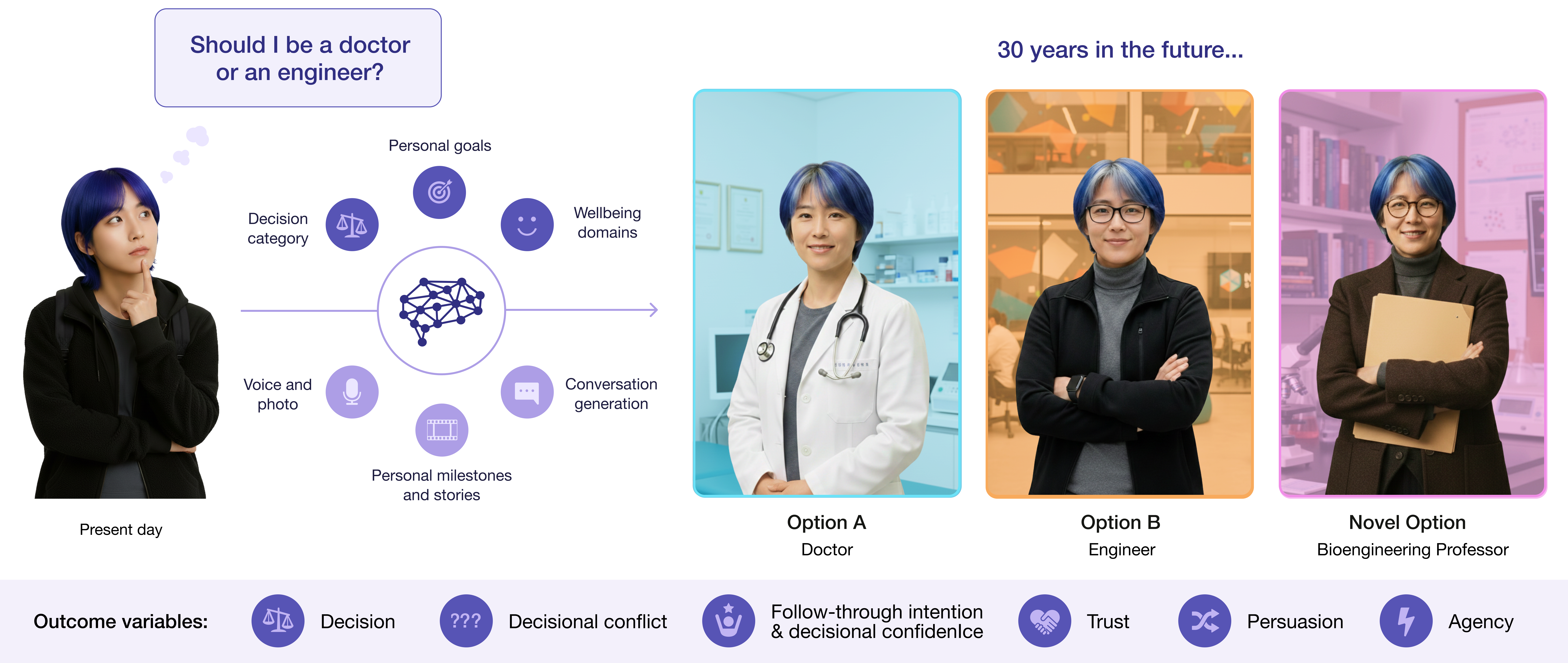
核心思路:论文提出通过AI驱动的数字双胞胎,模拟参与者未来的生活场景,从而使不同的选择路径更加生动,帮助参与者进行更深入的思考,而不是仅仅预测最佳结果。
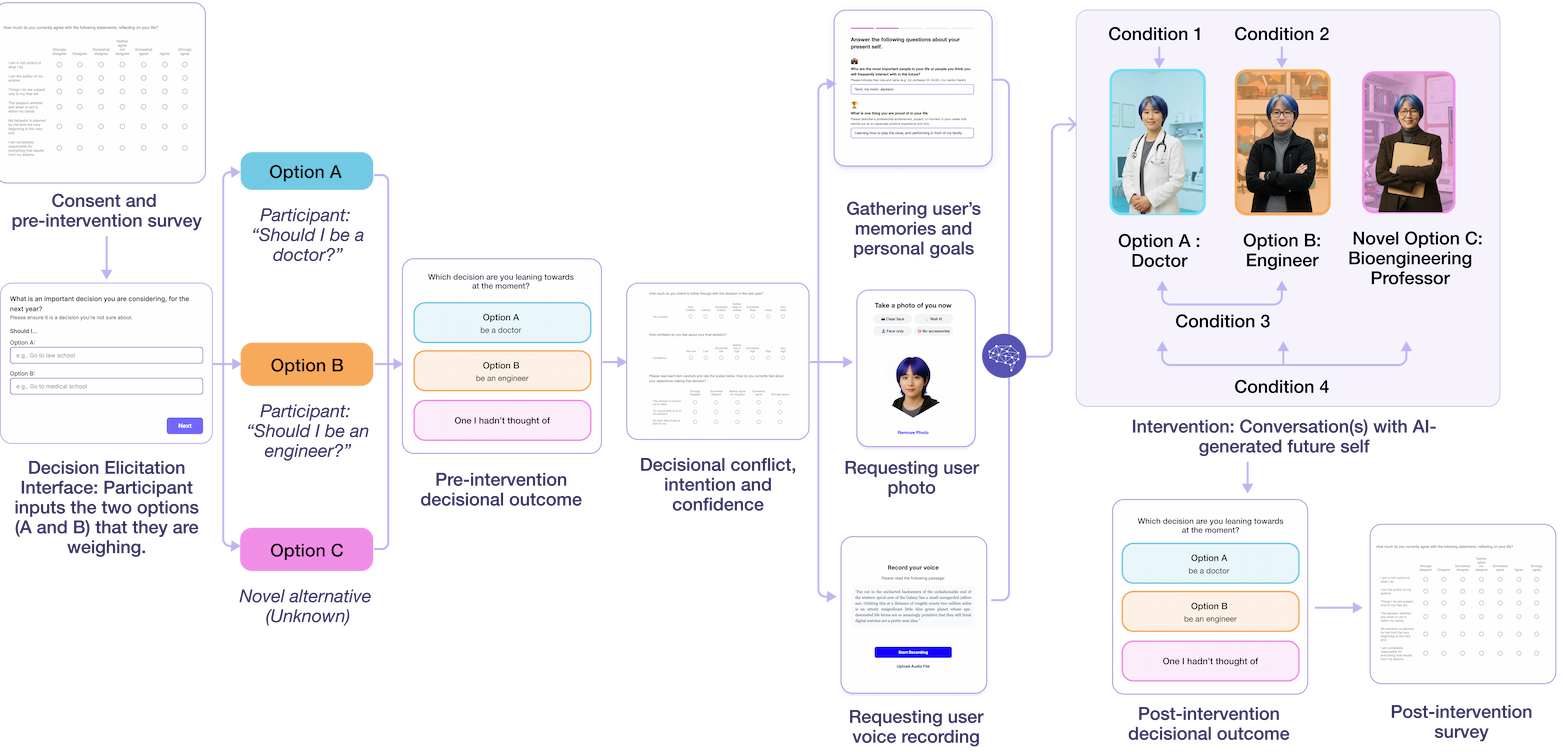
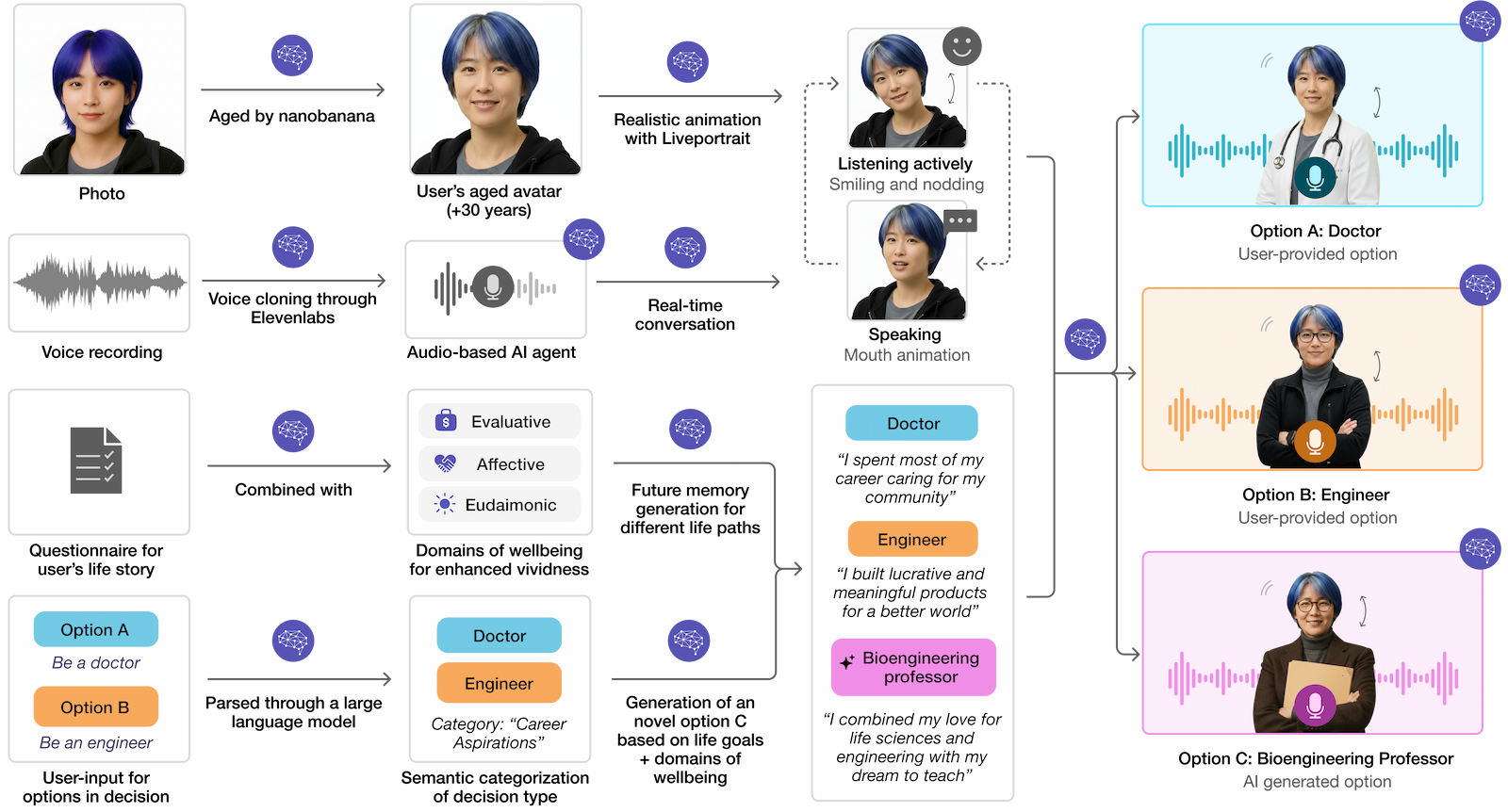
技术框架:整体架构包括多模态合成模块,结合面部年龄进展、声音克隆和大型语言模型对话,生成个性化的未来化身。参与者在实验中被分配到不同的条件下进行决策。
关键创新:最重要的技术创新在于通过数字双胞胎的方式,使未来自我变得可视化,从而扩展了参与者的选择范围。这与传统的决策支持方法有本质区别,后者通常只关注最佳结果的预测。
关键设计:在实验中,设置了不同的化身条件,包括单选、平衡双选和扩展三选。关键参数包括参与者的年龄、决策类型以及对未来化身的个性化设计,确保每个化身都能真实反映参与者的潜在未来。
🖼️ 关键图片
📊 实验亮点
实验结果显示,单选化身使参与者向呈现选项的倾斜度增加,而平衡展示则使其向两个选项均衡移动。引入系统生成的第三选项显著提高了新选择的采纳率,表明AI生成的未来自我有效扩展了决策选择。
🎯 应用场景
该研究的潜在应用领域包括职业规划、教育咨询和心理辅导等。通过帮助个体更好地理解未来选择的后果,能够提高决策质量,促进个人发展。未来,随着技术的进步,数字双胞胎可能在更多领域发挥重要作用,影响人们的生活决策。
📄 摘要(原文)
Major life transitions demand high-stakes decisions, yet people often struggle to imagine how their future selves will live with the consequences. To support this limited capacity for mental time travel, we introduce AI-enabled digital twins that have ``lived through'' simulated life scenarios. Rather than predicting optimal outcomes, these simulations extend prospective cognition by making alternative futures vivid enough to support deliberation without assuming which path is best. We evaluate this idea in a randomized controlled study (N=192) using multimodal synthesis - facial age progression, voice cloning, and large language model dialogue - to create personalized avatars representing participants 30 years forward. Young adults 18 to 28 years old described pending binary decisions and were assigned to guided imagination or one of four avatar conditions: single-option, balanced dual-option, or expanded three-option with a system-generated novel alternative. Results showed asymmetric effects: single-sided avatars increased shifts toward the presented option, while balanced presentation produced movement toward both. Introducing a system-generated third option increased adoption of this new alternative compared to control, suggesting that AI-generated future selves can expand choice by surfacing paths that might otherwise go unnoticed. Participants rated evaluative reasoning and eudaimonic meaning-making as more important than emotional or visual vividness. Perceived persuasiveness and baseline agency predicted decision change. These findings advance understanding of AI-mediated episodic prospection and raise questions about autonomy in AI-augmented decisions.