AI- and Ontology-Based Enhancements to FMEA for Advanced Systems Engineering: Current Developments and Future Directions
作者: Haytham Younus, Sohag Kabir, Felician Campean, Pascal Bonnaud, David Delaux
分类: cs.AI, eess.SY
发布日期: 2025-11-21
备注: This manuscript is based on research undertaken by our doctoral student at the University of Bradford. The associated PhD thesis has been formally submitted to the University and is currently awaiting final examination. The review article is being shared on arXiv to make the review accessible to the research community while the thesis examination process is ongoing
💡 一句话要点
利用AI与本体增强FMEA,提升先进系统工程能力
🎯 匹配领域: 支柱九:具身大模型 (Embodied Foundation Models)
关键词: 失效模式与影响分析 人工智能 本体 系统工程 机器学习 自然语言处理 模型驱动工程
📋 核心要点
- 传统FMEA方法依赖手动和专家经验,难以应对复杂系统工程的需求,存在效率和准确性问题。
- 论文提出利用AI技术(机器学习、NLP)和本体论,实现FMEA流程的自动化、智能化和语义增强。
- 通过集成AI和本体,FMEA能够更好地支持模型驱动的系统工程,提升适应性和韧性,并解决数据质量等挑战。
📝 摘要(中文)
本文综述了将传统失效模式与影响分析(FMEA)转变为更智能、数据驱动和语义丰富的过程的最新进展。随着工程系统复杂性的增加,传统FMEA方法(主要为手动、以文档为中心且依赖专家)已越来越不能满足现代系统工程的需求。我们研究了人工智能(AI)技术,包括机器学习和自然语言处理,如何通过自动化故障预测、优先级排序以及从运营数据中提取知识,将FMEA转变为更动态、数据驱动、智能和模型集成的过程。同时,我们探讨了本体在形式化系统知识、支持语义推理、提高可追溯性以及实现跨领域互操作性方面的作用。该综述还综合了新兴的混合方法,例如本体信息学习和大型语言模型集成,这些方法进一步增强了解释性和自动化。这些发展在基于模型的系统工程(MBSE)和功能建模的更广泛背景下进行了讨论,展示了AI和本体如何支持更具适应性和弹性的FMEA工作流程。我们批判性地分析了一系列工具、案例研究和集成策略,同时确定了与数据质量、可解释性、标准化和跨学科采用相关的关键挑战。通过利用AI、系统工程和使用本体的知识表示,本次综述为将FMEA嵌入到智能、知识丰富的工程环境中提供了一个结构化的路线图。
🔬 方法详解
问题定义:传统FMEA方法在处理日益复杂的工程系统时面临诸多挑战。这些方法通常是手动、以文档为中心,并且严重依赖领域专家的经验。这导致效率低下、容易出错,并且难以处理大量运营数据。此外,传统FMEA缺乏形式化的知识表示,阻碍了语义推理和跨领域互操作性。
核心思路:本文的核心思路是将人工智能(AI)技术和本体论引入FMEA流程,以实现自动化、智能化和语义增强。AI技术,如机器学习和自然语言处理,可以用于自动化故障预测、优先级排序和知识提取。本体论则可以用于形式化系统知识,支持语义推理,提高可追溯性,并实现跨领域互操作性。
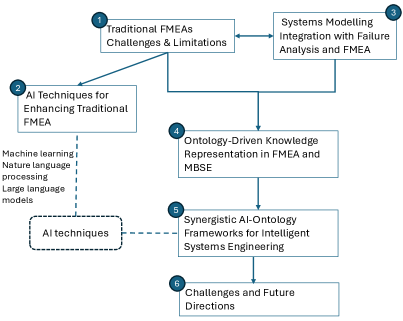
技术框架:论文综述了多种技术框架,包括:1) 利用机器学习模型进行故障预测和风险评估;2) 使用自然语言处理技术从文本数据中提取故障信息;3) 构建本体来表示系统知识和故障模式;4) 集成AI和本体的混合方法,例如本体信息学习和大型语言模型集成。这些框架旨在将FMEA流程与模型驱动的系统工程(MBSE)集成,从而实现更高效、更准确的故障分析。
关键创新:论文的关键创新在于强调了AI和本体在增强FMEA流程中的协同作用。通过将AI的自动化能力与本体的知识表示能力相结合,可以构建更智能、更灵活的FMEA系统。此外,论文还探讨了新兴的混合方法,例如本体信息学习和大型语言模型集成,这些方法进一步增强了解释性和自动化。
关键设计:论文没有具体涉及关键参数设置、损失函数或网络结构等技术细节,而是侧重于对现有方法的综述和分析。未来的研究方向可能包括:1) 设计特定的机器学习模型用于故障预测;2) 开发用于从文本数据中提取故障信息的自然语言处理算法;3) 构建领域特定的本体来表示系统知识和故障模式;4) 研究如何将AI和本体集成到现有的FMEA工具和流程中。
🖼️ 关键图片


📊 实验亮点
本文是一篇综述性文章,没有提供具体的实验结果。其亮点在于系统地总结了AI和本体在FMEA中的应用,并指出了未来的研究方向。通过对现有工具、案例研究和集成策略的批判性分析,为研究人员和工程师提供了一个结构化的路线图,以将FMEA嵌入到智能、知识丰富的工程环境中。
🎯 应用场景
该研究成果可应用于航空航天、汽车、能源等多个领域,提升复杂系统的可靠性和安全性。通过自动化故障分析和风险评估,可以降低维护成本,提高运营效率,并为产品设计提供更有价值的反馈。未来,该技术有望实现更智能、更自适应的系统工程。
📄 摘要(原文)
This article presents a state-of-the-art review of recent advances aimed at transforming traditional Failure Mode and Effects Analysis (FMEA) into a more intelligent, data-driven, and semantically enriched process. As engineered systems grow in complexity, conventional FMEA methods, largely manual, document-centric, and expert-dependent, have become increasingly inadequate for addressing the demands of modern systems engineering. We examine how techniques from Artificial Intelligence (AI), including machine learning and natural language processing, can transform FMEA into a more dynamic, data-driven, intelligent, and model-integrated process by automating failure prediction, prioritisation, and knowledge extraction from operational data. In parallel, we explore the role of ontologies in formalising system knowledge, supporting semantic reasoning, improving traceability, and enabling cross-domain interoperability. The review also synthesises emerging hybrid approaches, such as ontology-informed learning and large language model integration, which further enhance explainability and automation. These developments are discussed within the broader context of Model-Based Systems Engineering (MBSE) and function modelling, showing how AI and ontologies can support more adaptive and resilient FMEA workflows. We critically analyse a range of tools, case studies, and integration strategies, while identifying key challenges related to data quality, explainability, standardisation, and interdisciplinary adoption. By leveraging AI, systems engineering, and knowledge representation using ontologies, this review offers a structured roadmap for embedding FMEA within intelligent, knowledge-rich engineering environments.