CyberMentor: AI Powered Learning Tool Platform to Address Diverse Student Needs in Cybersecurity Education
作者: Tianyu Wang, Nianjun Zhou, Zhixiong Chen
分类: cs.CY, cs.AI
发布日期: 2025-01-16
备注: 11 pages, 8 figures
💡 一句话要点
CyberMentor:AI驱动的赛博安全教育平台,解决学生多样化需求
🎯 匹配领域: 支柱九:具身大模型 (Embodied Foundation Models)
关键词: 赛博安全教育 AI辅助学习 大语言模型 检索增强生成 个性化学习 agentic workflow LangChain
📋 核心要点
- 赛博安全专业的非传统学生常缺乏支持,现有AI助手存在内容相关性、专业性等问题。
- CyberMentor平台利用agentic workflow、LLM和RAG技术,为学生提供个性化学习支持。
- 实验表明,CyberMentor在知识获取、技能提升和职业准备方面表现出色,具有推广价值。
📝 摘要(中文)
本文介绍了一个名为CyberMentor的学习工具平台,旨在解决赛博安全专业非传统学生在教育体验中面临的挑战,例如缺乏来自同伴、家人和教授的建议,以及现有LLM驱动的AI助手在内容相关性、建议地域性、专业知识和时效性等方面的问题。该平台利用agentic workflow和生成式大语言模型(LLMs),结合检索增强生成(RAG)技术,实现准确和上下文相关的知识检索,从而提供可访问性和个性化的支持。通过三个用例,展示了CyberMentor在知识获取、职业准备、技能指导和实时学习支持方面的价值。使用LangChain提示评估方法验证了平台在帮助性、正确性和完整性方面的强大性能。CyberMentor的开源设计使其能够适应其他学科,促进教育创新并扩大其潜在影响。
🔬 方法详解
问题定义:赛博安全教育中,非传统学生(例如转专业学生、在职学生)往往缺乏足够的学习资源和指导,难以获得同伴、家人和教授的帮助。现有的大语言模型驱动的AI助手,在赛博安全领域的专业知识、建议的地域性、内容的针对性以及响应的及时性等方面存在不足,无法充分满足学生的需求。
核心思路:论文的核心思路是构建一个AI驱动的学习工具平台CyberMentor,该平台能够根据学生的需求,提供个性化的知识、技能和职业准备方面的支持。通过结合agentic workflow、大语言模型和检索增强生成技术,平台能够更准确、更及时地响应学生的问题,并提供更具针对性的建议。
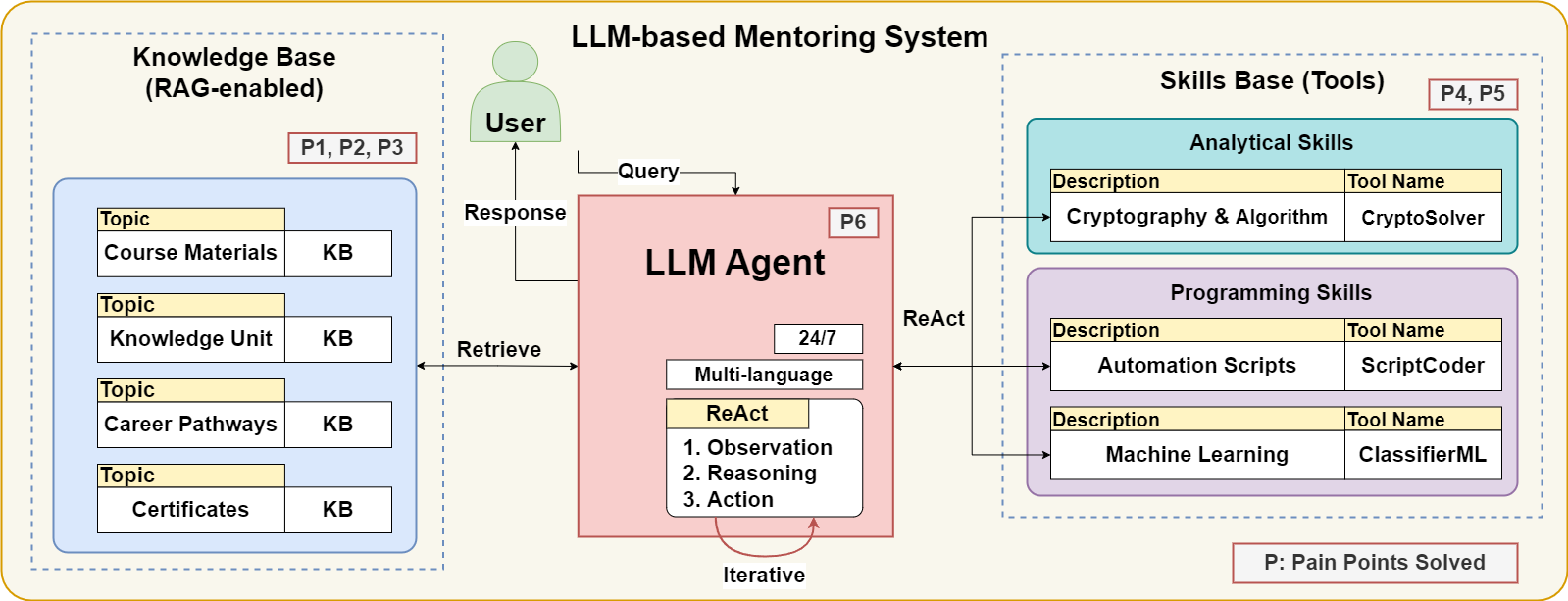
技术框架:CyberMentor平台采用agentic workflow,将复杂的学习任务分解为多个步骤,并由不同的智能体(agents)协同完成。平台的核心是生成式大语言模型(LLMs),用于生成答案和提供建议。为了提高答案的准确性和相关性,平台采用了检索增强生成(RAG)技术,从知识库中检索相关信息,并将其作为LLM的输入。整体流程包括问题接收、信息检索、答案生成和结果呈现等模块。
关键创新:CyberMentor的关键创新在于将agentic workflow、大语言模型和检索增强生成技术相结合,构建了一个个性化的赛博安全学习支持平台。与传统的AI助手相比,CyberMentor能够更准确地理解学生的需求,并提供更具针对性的建议。此外,平台的开源设计也使其能够方便地进行定制和扩展,以适应不同的学习场景。
关键设计:论文中没有详细描述关键的参数设置、损失函数、网络结构等技术细节。但是,RAG模块中知识库的构建和维护,以及agentic workflow中各个智能体的设计和协同方式,是影响平台性能的关键因素。LangChain prompt-based evaluation methodology被用于评估平台性能。
🖼️ 关键图片
📊 实验亮点
实验结果表明,CyberMentor平台在帮助性、正确性和完整性方面表现出色,能够有效地支持学生学习赛博安全知识和技能。通过LangChain prompt-based evaluation methodology评估,验证了平台在知识获取和职业准备方面的有效性,并展示了其在技能指导和实时学习支持方面的价值。
🎯 应用场景
CyberMentor平台可应用于赛博安全教育领域,为学生提供个性化的学习支持,提高学习效率和效果。该平台还可扩展到其他学科,为不同专业的学生提供类似的AI辅助学习服务。此外,该平台的开源设计使其能够被广泛应用和定制,促进教育创新。
📄 摘要(原文)
Many non-traditional students in cybersecurity programs often lack access to advice from peers, family members and professors, which can hinder their educational experiences. Additionally, these students may not fully benefit from various LLM-powered AI assistants due to issues like content relevance, locality of advice, minimum expertise, and timing. This paper addresses these challenges by introducing an application designed to provide comprehensive support by answering questions related to knowledge, skills, and career preparation advice tailored to the needs of these students. We developed a learning tool platform, CyberMentor, to address the diverse needs and pain points of students majoring in cybersecurity. Powered by agentic workflow and Generative Large Language Models (LLMs), the platform leverages Retrieval-Augmented Generation (RAG) for accurate and contextually relevant information retrieval to achieve accessibility and personalization. We demonstrated its value in addressing knowledge requirements for cybersecurity education and for career marketability, in tackling skill requirements for analytical and programming assignments, and in delivering real time on demand learning support. Using three use scenarios, we showcased CyberMentor in facilitating knowledge acquisition and career preparation and providing seamless skill-based guidance and support. We also employed the LangChain prompt-based evaluation methodology to evaluate the platform's impact, confirming its strong performance in helpfulness, correctness, and completeness. These results underscore the system's ability to support students in developing practical cybersecurity skills while improving equity and sustainability within higher education. Furthermore, CyberMentor's open-source design allows for adaptation across other disciplines, fostering educational innovation and broadening its potential impact.