TravelAgent: Generative Agents in the Built Environment
作者: Ariel Noyman, Kai Hu, Kent Larson
分类: cs.AI, cs.HC
发布日期: 2024-12-25
备注: 21 pages 9 figs
💡 一句话要点
TravelAgent:构建环境中基于生成式Agent的人类行为模拟平台
🎯 匹配领域: 支柱九:具身大模型 (Embodied Foundation Models)
关键词: 生成式Agent 建筑环境 人类行为模拟 3D虚拟环境 多模态感知
📋 核心要点
- 传统方法难以捕捉真实世界行为的复杂性和动态性,限制了对建筑环境中人类行为的理解。
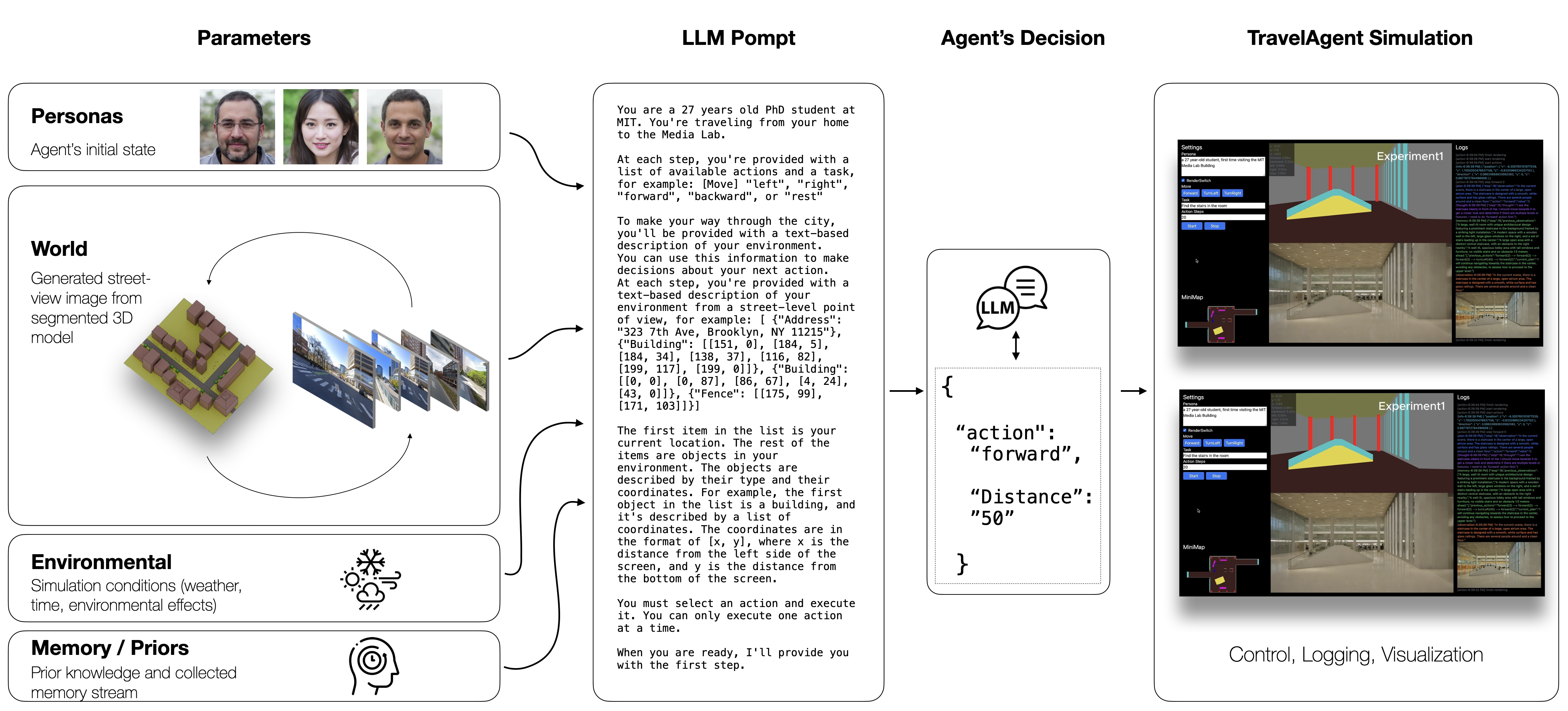
- TravelAgent利用生成式Agent模拟行人在不同环境下的导航和活动,Agent能感知多模态输入并进行类人决策。
- 实验表明,TravelAgent在不同空间布局和Agent类型下实现了76%的任务完成率,验证了其有效性。
📝 摘要(中文)
为了更好地理解人类在建筑环境中的行为,从而设计出以用户为中心的城市空间,我们提出了TravelAgent,这是一个新颖的模拟平台。该平台模拟了行人在不同室内外环境以及不同情境和环境条件下的导航和活动模式。TravelAgent利用集成到3D虚拟环境中的生成式Agent,使Agent能够处理多模态感官输入,并表现出类人的决策、行为和适应能力。通过导航、寻路和自由探索等实验,我们分析了来自100个模拟的数据,这些模拟包含跨不同空间布局和Agent类型的1898个Agent步骤,实现了76%的总体任务完成率。通过空间、语言和情感分析,我们展示了Agent如何感知、适应或挣扎于周围环境和分配的任务。我们的研究结果突出了TravelAgent作为城市设计、空间认知研究和基于Agent建模工具的潜力。我们讨论了在部署生成式Agent以评估和改进空间设计方面的关键挑战和机遇,并将TravelAgent作为一种模拟和理解建筑环境中人类体验的新范例。
🔬 方法详解
问题定义:现有方法,如人工观察、调查和简化模拟,无法充分捕捉真实建筑环境中人类行为的复杂性和动态性。这使得难以设计出真正以用户为中心的城市空间。因此,需要一种能够更真实地模拟人类行为的工具,以便更好地理解和预测人们在建筑环境中的行为模式。
核心思路:TravelAgent的核心思路是利用生成式Agent模拟人类在建筑环境中的行为。通过将Agent置于3D虚拟环境中,并赋予它们感知多模态输入和进行类人决策的能力,可以模拟出更真实、更动态的人类行为模式。这种方法允许研究人员在各种情境和环境条件下测试不同的设计方案,并评估其对人类行为的影响。
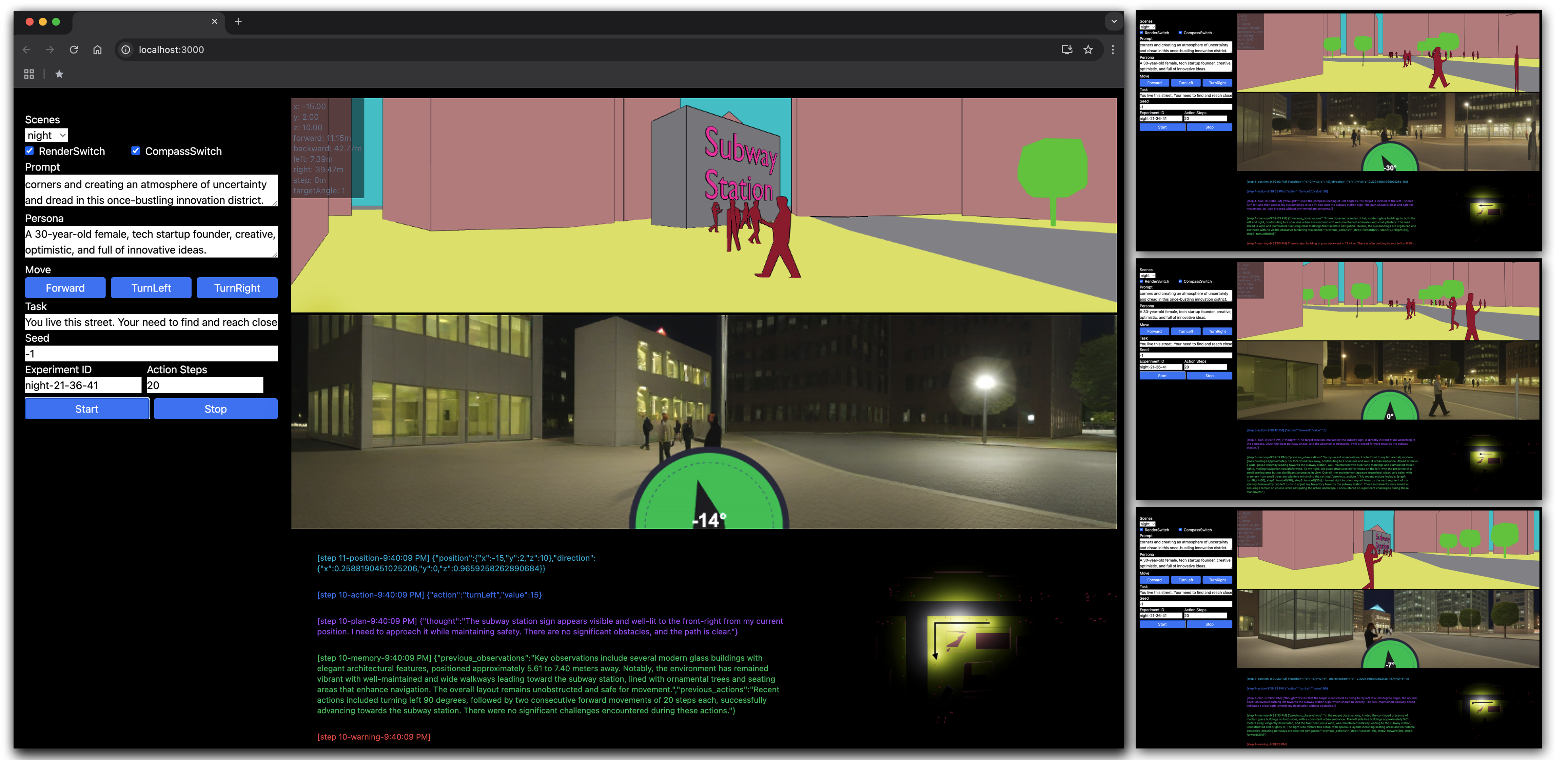
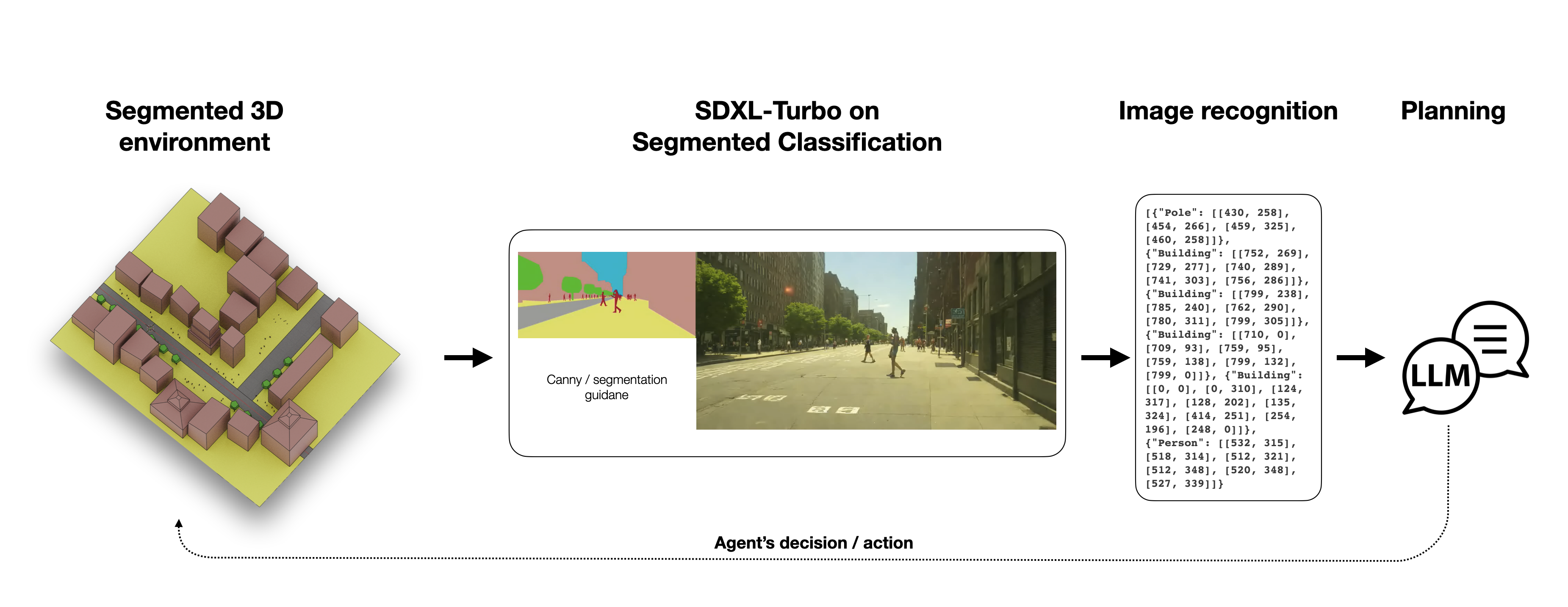
技术框架:TravelAgent的整体框架包括以下几个主要模块:1) 3D虚拟环境:提供Agent活动的物理空间。2) 生成式Agent:负责模拟人类行为,包括感知、决策和行动。3) 多模态输入:为Agent提供关于环境的信息,例如视觉、听觉和文本信息。4) 行为模型:定义Agent如何根据感知到的信息做出决策和采取行动。5) 分析模块:用于分析Agent的行为数据,例如导航路径、活动模式和情感表达。
关键创新:TravelAgent的关键创新在于将生成式Agent集成到3D虚拟环境中,并赋予它们处理多模态输入和进行类人决策的能力。这使得Agent能够更真实地模拟人类行为,并对环境变化做出适应性反应。与传统的基于规则的Agent相比,生成式Agent能够学习和适应新的环境和任务,从而提供更灵活和更强大的模拟能力。
关键设计:TravelAgent的关键设计包括:1) Agent的感知模型:用于处理多模态输入,例如使用卷积神经网络处理视觉信息,使用自然语言处理模型处理文本信息。2) Agent的决策模型:用于根据感知到的信息做出决策,例如使用强化学习算法训练Agent学习最佳导航策略。3) Agent的行动模型:用于控制Agent在3D虚拟环境中的移动和交互,例如使用运动学模型模拟人类的行走姿势。
🖼️ 关键图片
📊 实验亮点
TravelAgent在导航、寻路和自由探索等任务中进行了实验,结果表明,该平台在不同空间布局和Agent类型下实现了76%的总体任务完成率。通过空间、语言和情感分析,研究人员能够深入了解Agent如何感知、适应或挣扎于周围环境和分配的任务。这些结果验证了TravelAgent作为模拟和理解建筑环境中人类体验的有效性。
🎯 应用场景
TravelAgent可应用于城市规划、建筑设计、空间认知研究等领域。它可以帮助设计师评估不同设计方案对行人行为的影响,优化空间布局,提高用户体验。此外,该平台还可以用于研究人类在复杂环境中的导航和决策过程,为空间认知研究提供新的工具和方法。未来,TravelAgent有望成为评估和改进空间设计的新范例。
📄 摘要(原文)
Understanding human behavior in built environments is critical for designing functional, user centered urban spaces. Traditional approaches, such as manual observations, surveys, and simplified simulations, often fail to capture the complexity and dynamics of real world behavior. To address these limitations, we introduce TravelAgent, a novel simulation platform that models pedestrian navigation and activity patterns across diverse indoor and outdoor environments under varying contextual and environmental conditions. TravelAgent leverages generative agents integrated into 3D virtual environments, enabling agents to process multimodal sensory inputs and exhibit human-like decision-making, behavior, and adaptation. Through experiments, including navigation, wayfinding, and free exploration, we analyze data from 100 simulations comprising 1898 agent steps across diverse spatial layouts and agent archetypes, achieving an overall task completion rate of 76%. Using spatial, linguistic, and sentiment analyses, we show how agents perceive, adapt to, or struggle with their surroundings and assigned tasks. Our findings highlight the potential of TravelAgent as a tool for urban design, spatial cognition research, and agent-based modeling. We discuss key challenges and opportunities in deploying generative agents for the evaluation and refinement of spatial designs, proposing TravelAgent as a new paradigm for simulating and understanding human experiences in built environments.