AI-in-the-loop: The future of biomedical visual analytics applications in the era of AI
作者: Katja Bühler, Thomas Höllt, Thomas Schulz, Pere-Pau Vázquez
分类: cs.HC, cs.AI, cs.GR
发布日期: 2024-12-20
备注: Accepted for publication in IEEE Computer Graphics & Applications
期刊: K. Bühler, T. Hollt, T. Schultz and P. Vazquez, "AI-in-The-Loop: The Future of Biomedical Visual Analytics Applications in the Era of AI" in IEEE Computer Graphics and Applications, vol. 45, no. 02, pp. 90-99, March-April 2025
💡 一句话要点
探讨AI驱动下生物医学可视化分析的未来,强调“AI-in-the-loop”的人机协作模式。
🎯 匹配领域: 支柱九:具身大模型 (Embodied Foundation Models)
关键词: 生物医学可视化 可视分析 人工智能 人机协作 AI-in-the-loop
📋 核心要点
- 现有生物医学数据分析面临透明度、效率和可靠性挑战,需要更有效的方法来处理复杂和敏感的数据。
- 论文提出“AI-in-the-loop”的概念,强调在生物医学可视分析中,AI作为辅助工具,而非完全替代人类专家。
- 通过分析AI在可视化工作流程中的应用,展示了AI在生物医学可视化领域转型的潜力,并强调人机协作的重要性。
📝 摘要(中文)
本文探讨了人工智能(AI)在现代数据分析中的核心作用,以及大型语言模型和多模态基础模型对代码生成、图表绘制和可视化等方面的影响。重点关注AI在数据可视化和可视分析工作流程中带来的变革,以及AI重塑可视分析应用方法和设计的潜力。文章以生物医学数据分析为例,讨论了在透明度、效率和可靠性要求高的复杂敏感数据决策中,AI所面临的机遇、挑战和威胁。通过分析AI在交互式可视化和可视分析流程中的应用,突出了AI在生物医学可视化领域转型的潜力。文章强调,在保持人类专家主导地位的前提下,应关注以人为中心的流程,并采用“AI-in-the-loop”的可视分析方法,而非传统的“human-in-the-loop”方法。
🔬 方法详解
问题定义:生物医学数据分析领域面临着数据复杂、决策敏感、对透明度和可靠性要求极高的挑战。现有方法在处理海量数据、发现隐藏模式以及支持专家进行高效决策方面存在瓶颈,需要更智能、更高效的可视分析工具。
核心思路:论文的核心思路是转变传统“human-in-the-loop”的模式,提倡“AI-in-the-loop”模式。这意味着将AI作为辅助工具集成到人类主导的可视分析流程中,利用AI的能力来增强而非取代人类专家的判断和决策。这种设计旨在充分发挥AI的优势,同时确保人类的控制权和责任。
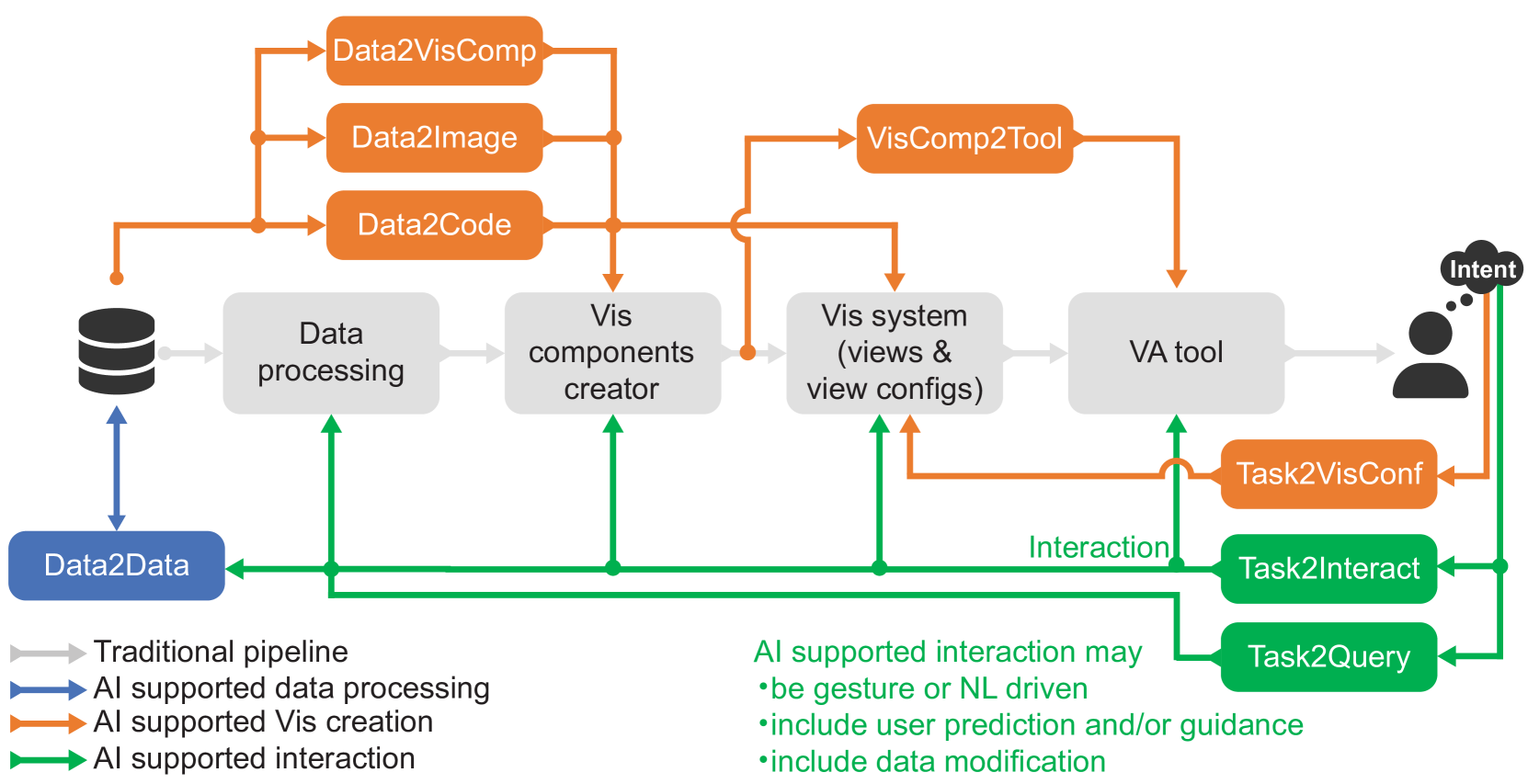
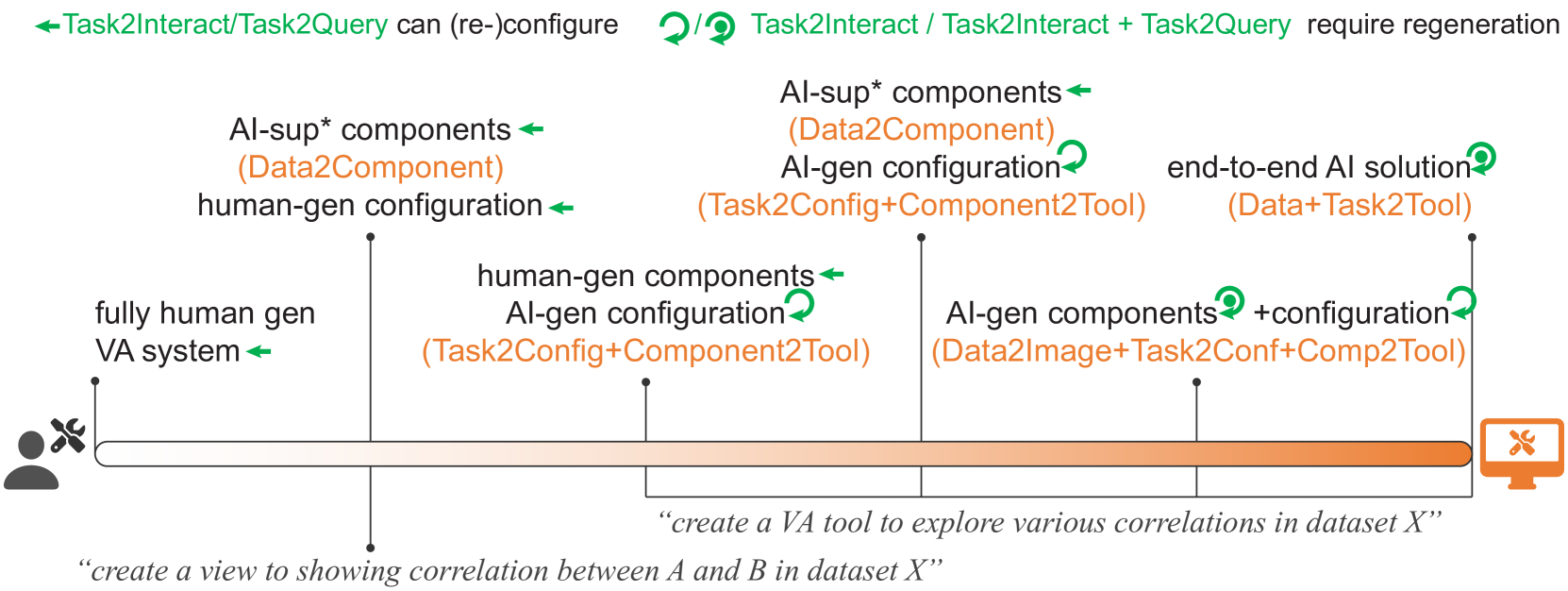
技术框架:论文并未提出一个具体的、全新的技术框架,而是对现有可视分析工作流程进行了重新审视,并探讨了AI如何融入这些流程的各个阶段。这包括数据预处理、特征提取、模式识别、可视化呈现和交互式探索等环节。AI可以用于自动化数据清洗、智能推荐可视化方法、辅助用户发现数据中的关联和异常等。
关键创新:论文的关键创新在于提出了“AI-in-the-loop”这一概念,强调了在生物医学可视分析中人机协作的重要性。与现有方法相比,该方法更加注重人类专家的主导地位,并将AI视为一种增强人类能力的工具,而非完全自动化的解决方案。
关键设计:论文并未涉及具体的算法或模型设计,而是侧重于方法论层面的探讨。关键设计在于如何将AI无缝集成到现有的可视分析流程中,并确保AI的输出结果是可解释、可信赖的,从而支持人类专家做出明智的决策。这需要关注AI模型的透明度、可解释性以及与人类交互的友好性。
🖼️ 关键图片

📊 实验亮点
本文是一篇观点性文章,主要贡献在于提出了“AI-in-the-loop”这一新的视角,并分析了AI在生物医学可视分析中的潜在应用。虽然没有提供具体的实验数据,但其提出的观点对于未来生物医学可视分析领域的研究方向具有重要的指导意义,强调了人机协作的重要性,并为未来的研究提供了新的思路。
🎯 应用场景
该研究成果可应用于多种生物医学领域,例如疾病诊断、药物研发、基因组学研究等。通过AI辅助的可视分析,可以帮助研究人员更快速地发现疾病的潜在机制、评估药物的疗效、理解基因之间的相互作用,从而加速科研进程,改善医疗水平,并最终提升患者的福祉。
📄 摘要(原文)
AI is the workhorse of modern data analytics and omnipresent across many sectors. Large Language Models and multi-modal foundation models are today capable of generating code, charts, visualizations, etc. How will these massive developments of AI in data analytics shape future data visualizations and visual analytics workflows? What is the potential of AI to reshape methodology and design of future visual analytics applications? What will be our role as visualization researchers in the future? What are opportunities, open challenges and threats in the context of an increasingly powerful AI? This Visualization Viewpoint discusses these questions in the special context of biomedical data analytics as an example of a domain in which critical decisions are taken based on complex and sensitive data, with high requirements on transparency, efficiency, and reliability. We map recent trends and developments in AI on the elements of interactive visualization and visual analytics workflows and highlight the potential of AI to transform biomedical visualization as a research field. Given that agency and responsibility have to remain with human experts, we argue that it is helpful to keep the focus on human-centered workflows, and to use visual analytics as a tool for integrating
AI-in-the-loop''. This is in contrast to the more traditional termhuman-in-the-loop'', which focuses on incorporating human expertise into AI-based systems.