An AI-Driven Data Mesh Architecture Enhancing Decision-Making in Infrastructure Construction and Public Procurement
作者: Saurabh Mishra, Mahendra Shinde, Aniket Yadav, Bilal Ayyub, Anand Rao
分类: cs.AI, cs.DB, cs.MA
发布日期: 2024-11-29
💡 一句话要点
提出基于AI驱动的数据网格架构,提升基础设施建设和公共采购的决策效率。
🎯 匹配领域: 支柱九:具身大模型 (Embodied Foundation Models)
关键词: 数据网格 知识图谱 大型语言模型 基础设施建设 公共采购 AI驱动决策 多智能体系统
📋 核心要点
- 传统基础设施建设和公共采购缺乏透明度和信息可访问性,限制了效率和生产力的提升。
- 论文提出基于数据网格和知识图谱的AI驱动平台,利用大型语言模型处理和结构化海量数据。
- 该系统旨在辅助项目早期规划、市场分析和风险评估等决策,提升政府效率和行业数字化水平。
📝 摘要(中文)
本研究提出了一种集成的软件生态系统,该系统利用数据网格和服务网格架构,旨在提高基础设施建设和公共采购领域的效率和生产力。该系统包含一个超过1000亿tokens的基础设施和采购训练数据集,涵盖科学出版物、活动和风险数据,并由系统化的AI框架进行结构化。平台通过知识图谱连接领域特定的多智能体任务和问答功能,标准化并摄取多样化的数据源,将其转化为结构化知识。借助大型语言模型(LLMs)和自动化技术,该系统革新了数据结构化和知识创建,辅助早期项目规划、详细研究、市场趋势分析和定性评估中的决策。该架构具有网络可扩展性,提供领域精选信息,使AI智能体能够促进推理和管理不确定性,并为未来扩展做好准备。这种AI与领域专业知识的结合不仅提高了效率和决策水平,还为政府效率提升和传统产业数字化转型奠定了基础。
🔬 方法详解
问题定义:基础设施建设和公共采购领域存在数据孤岛、信息不透明的问题,导致决策效率低下。现有方法难以有效整合和利用海量异构数据,无法提供及时、准确的决策支持。
核心思路:论文的核心思路是构建一个基于AI驱动的数据网格架构,将分散的数据源整合为统一的知识图谱,利用大型语言模型进行数据结构化和知识提取,并通过多智能体系统提供决策支持。这种设计旨在打破数据孤岛,提高信息可访问性,并利用AI技术实现自动化决策。
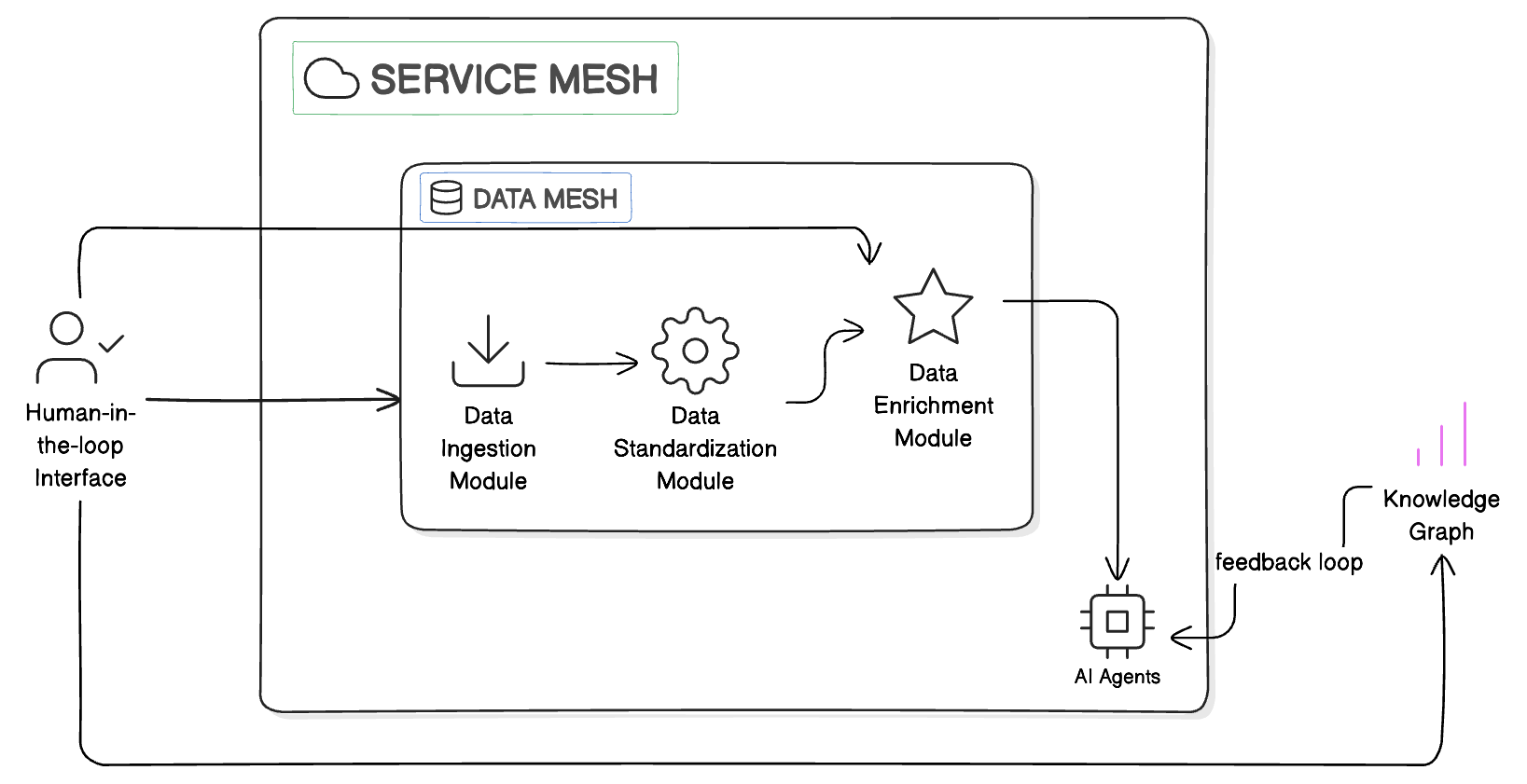
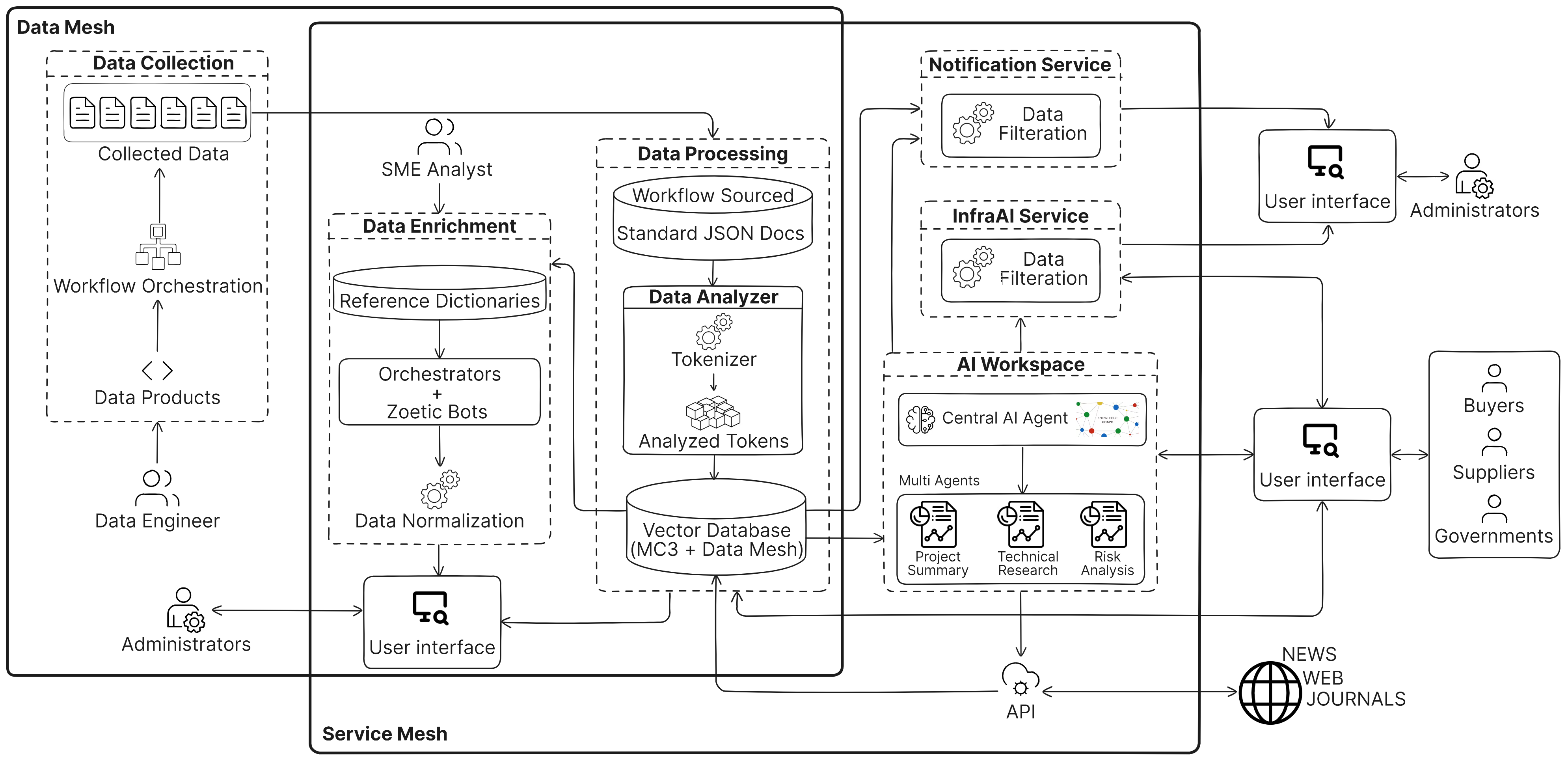
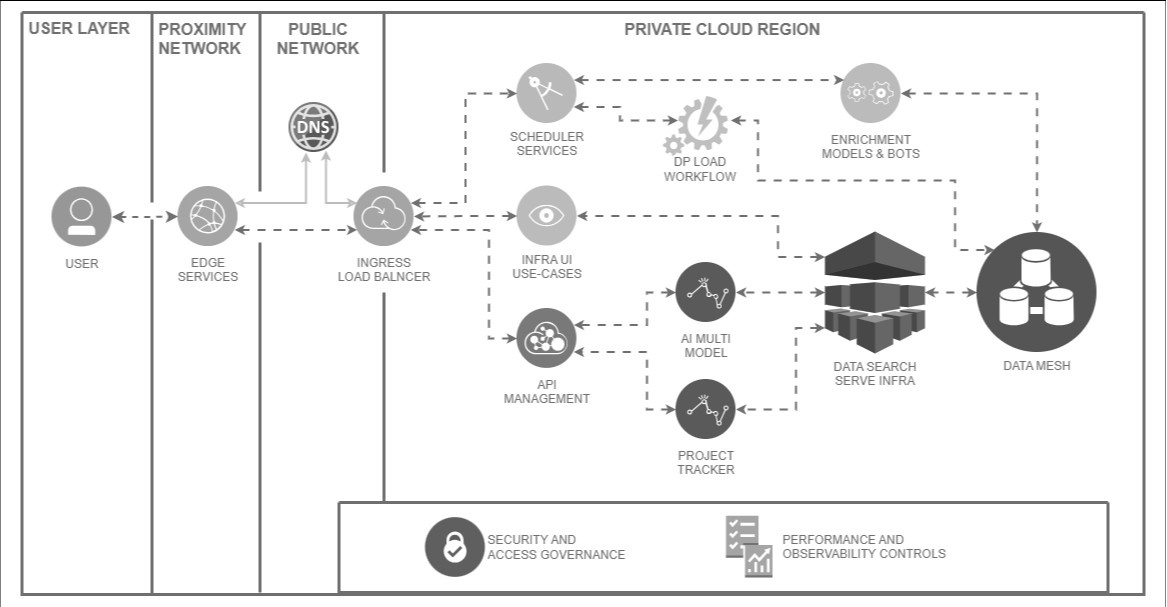
技术框架:该系统包含以下主要模块:1) 数据摄取模块,负责从各种来源(科学出版物、活动、风险数据等)收集数据;2) 数据结构化模块,利用大型语言模型将非结构化数据转化为结构化知识;3) 知识图谱构建模块,将结构化数据组织成知识图谱;4) 多智能体系统,基于知识图谱进行推理和决策支持;5) Web可扩展架构,提供领域精选信息和AI智能体服务。
关键创新:该研究的关键创新在于将数据网格架构、知识图谱和大型语言模型相结合,构建了一个端到端的AI驱动决策支持系统。与传统方法相比,该系统能够处理更大规模的异构数据,并提供更智能、更自动化的决策支持。
关键设计:该系统使用了超过1000亿tokens的训练数据集,涵盖基础设施和采购领域。知识图谱的构建采用了领域特定的本体和关系抽取方法。多智能体系统采用了基于规则和机器学习的混合推理方法。Web架构采用了可扩展的微服务架构。
🖼️ 关键图片
📊 实验亮点
摘要中未提供具体的实验数据或性能指标。但该研究构建了包含超过1000亿tokens的训练数据集,并成功将大型语言模型应用于基础设施和采购领域的数据结构化和知识提取,为后续的性能评估和优化奠定了基础。
🎯 应用场景
该研究成果可应用于智慧城市建设、政府公共采购优化、基础设施项目风险管理等领域。通过提升决策效率和透明度,降低项目成本,加速传统产业数字化转型,并为政府提供更科学的决策依据,具有重要的社会和经济价值。
📄 摘要(原文)
Infrastructure construction, often dubbed an "industry of industries," is closely linked with government spending and public procurement, offering significant opportunities for improved efficiency and productivity through better transparency and information access. By leveraging these opportunities, we can achieve notable gains in productivity, cost savings, and broader economic benefits. Our approach introduces an integrated software ecosystem utilizing Data Mesh and Service Mesh architectures. This system includes the largest training dataset for infrastructure and procurement, encompassing over 100 billion tokens, scientific publications, activities, and risk data, all structured by a systematic AI framework. Supported by a Knowledge Graph linked to domain-specific multi-agent tasks and Q&A capabilities, our platform standardizes and ingests diverse data sources, transforming them into structured knowledge. Leveraging large language models (LLMs) and automation, our system revolutionizes data structuring and knowledge creation, aiding decision-making in early-stage project planning, detailed research, market trend analysis, and qualitative assessments. Its web-scalable architecture delivers domain-curated information, enabling AI agents to facilitate reasoning and manage uncertainties, while preparing for future expansions with specialized agents targeting particular challenges. This integration of AI with domain expertise not only boosts efficiency and decision-making in construction and infrastructure but also establishes a framework for enhancing government efficiency and accelerating the transition of traditional industries to digital workflows. This work is poised to significantly influence AI-driven initiatives in this sector and guide best practices in AI Operations.