Leveraging generative artificial intelligence to simulate student learning behavior
作者: Songlin Xu, Xinyu Zhang
分类: cs.AI
发布日期: 2023-10-30
💡 一句话要点
利用生成性人工智能模拟学生学习行为以提升教育效果
🎯 匹配领域: 支柱九:具身大模型 (Embodied Foundation Models)
关键词: 学生模拟 生成性人工智能 学习行为 大型语言模型 教育技术 个性化学习 课程设计
📋 核心要点
- 现有方法主要依赖传统机器学习进行学习结果预测,难以真实模拟学生的学习行为和模式。
- 本文提出利用大型语言模型(LLMs)实例化虚拟学生,探索学习行为的复杂关联,超越简单的结果预测。
- 通过三项实验验证,发现虚拟学生的学习行为与实际学生相似,且与课程材料和理解水平有显著关联,提升了模拟的真实性。
📝 摘要(中文)
学生模拟为提升学习成果、推动教育研究以及塑造有效教学法提供了变革性的方法。本文探讨使用大型语言模型(LLMs)模拟学生学习行为的可行性。与传统的基于机器学习的预测不同,我们利用LLMs实例化具有特定人口统计特征的虚拟学生,揭示学习经历、课程材料、理解水平和参与度之间的复杂关联。我们的目标不仅是预测学习成果,而是复制真实学生的学习行为和模式。通过三项实验验证了这一假设,结果显示虚拟学生的学习行为与实际学生在多种人口统计因素上存在相似性,且随着评估历史的增加,模拟行为愈加真实。这些发现深化了我们对LLMs的理解,证明其在学生模拟中的可行性,从而推动更具适应性的课程设计,提升包容性和教育效果。
🔬 方法详解
问题定义:本文旨在解决传统机器学习方法在模拟学生学习行为方面的不足,现有方法往往无法真实反映学生的学习模式和行为。
核心思路:通过利用大型语言模型(LLMs),本文构建虚拟学生,模拟其学习行为,揭示学习经历与课程材料之间的复杂关系,旨在实现更真实的学习行为复制。
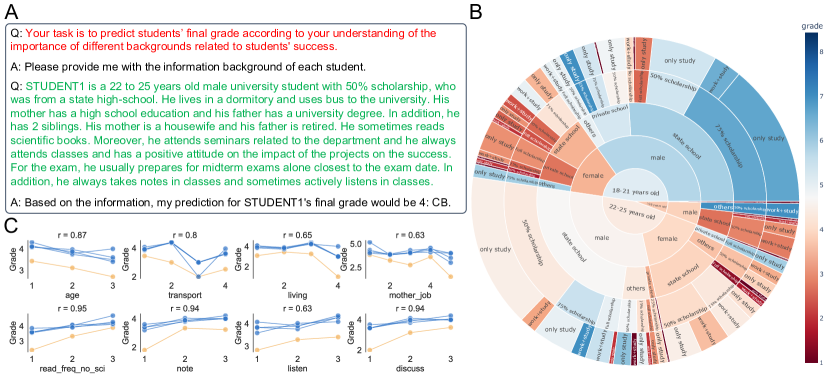
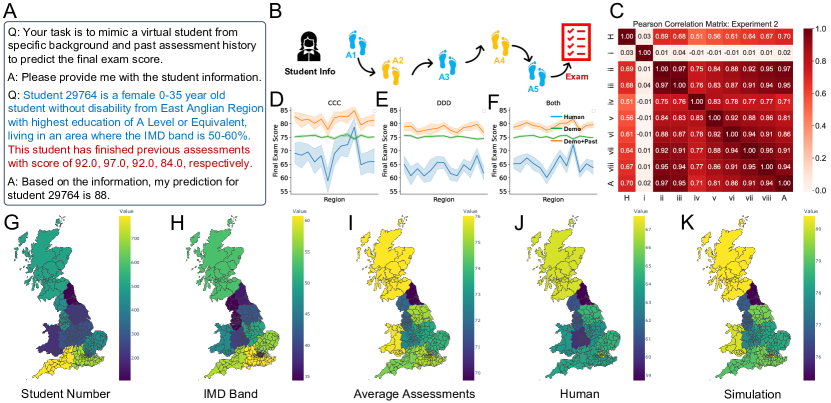
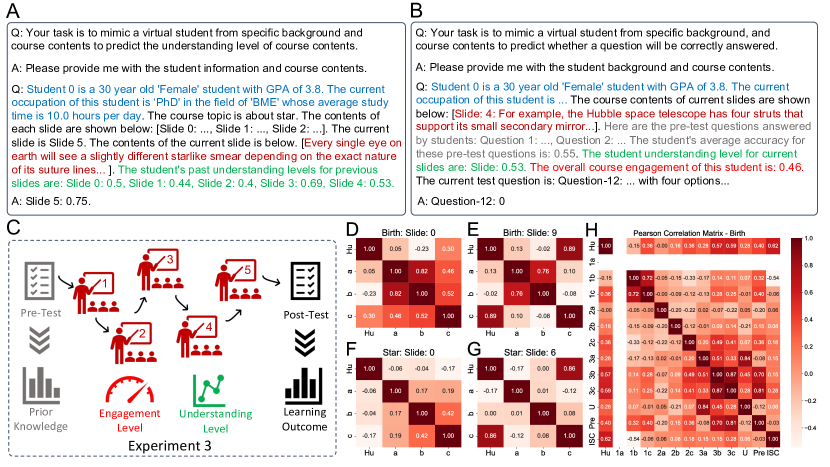
技术框架:研究分为三个实验阶段,第一阶段基于145个样本的学生人口统计数据进行学习结果模拟,第二阶段使用4524个样本的评估历史增强模拟的真实性,第三阶段结合先前知识和课程互动,分析虚拟学生的学习行为与课程材料的关联。
关键创新:本研究的创新在于首次利用LLMs进行学生学习行为的全面模拟,突破了传统方法的局限,实现了对学习行为的深度理解与再现。
关键设计:在实验中,采用了不同规模的数据集,设计了针对人口统计特征的模拟框架,重点关注学习行为与课程材料、理解水平的细致映射,确保模拟的准确性与有效性。
🖼️ 关键图片
📊 实验亮点
实验结果显示,第一项实验中虚拟学生的学习结果与实际学生在多个人口统计因素上存在显著相似性;第二项实验表明,随着评估历史的增加,虚拟学生的学习行为愈加真实;第三项实验则揭示了虚拟学生的学习行为与课程材料、理解水平之间的强关联,验证了LLMs在学生模拟中的有效性。
🎯 应用场景
该研究的潜在应用领域包括教育技术、个性化学习系统和课程设计。通过模拟学生学习行为,教育者可以更好地理解学生需求,设计更具包容性的课程,从而提升教育效果和学习体验。未来,该方法可能推动教育研究的进一步发展,促进教育公平。
📄 摘要(原文)
Student simulation presents a transformative approach to enhance learning outcomes, advance educational research, and ultimately shape the future of effective pedagogy. We explore the feasibility of using large language models (LLMs), a remarkable achievement in AI, to simulate student learning behaviors. Unlike conventional machine learning based prediction, we leverage LLMs to instantiate virtual students with specific demographics and uncover intricate correlations among learning experiences, course materials, understanding levels, and engagement. Our objective is not merely to predict learning outcomes but to replicate learning behaviors and patterns of real students. We validate this hypothesis through three experiments. The first experiment, based on a dataset of N = 145, simulates student learning outcomes from demographic data, revealing parallels with actual students concerning various demographic factors. The second experiment (N = 4524) results in increasingly realistic simulated behaviors with more assessment history for virtual students modelling. The third experiment (N = 27), incorporating prior knowledge and course interactions, indicates a strong link between virtual students' learning behaviors and fine-grained mappings from test questions, course materials, engagement and understanding levels. Collectively, these findings deepen our understanding of LLMs and demonstrate its viability for student simulation, empowering more adaptable curricula design to enhance inclusivity and educational effectiveness.