CompeteAI: Understanding the Competition Dynamics in Large Language Model-based Agents
作者: Qinlin Zhao, Jindong Wang, Yixuan Zhang, Yiqiao Jin, Kaijie Zhu, Hao Chen, Xing Xie
分类: cs.AI, cs.CL, cs.HC, cs.MA
发布日期: 2023-10-26 (更新: 2024-06-07)
备注: International Conference on Machine Learning (ICML) 2024 Oral; 16 pages; code is at: https://github.com/microsoft/competeai
🔗 代码/项目: GITHUB
💡 一句话要点
提出CompeteAI框架以研究LLM代理间的竞争动态
🎯 匹配领域: 支柱九:具身大模型 (Embodied Foundation Models)
关键词: 大型语言模型 竞争动态 智能代理 市场策略 社会经济模型
📋 核心要点
- 现有研究主要集中在代理之间的合作,缺乏对竞争机制的深入探讨,限制了对社会动态的全面理解。
- 本文提出了一个通用框架,结合GPT-4创建了一个虚拟城镇,模拟餐厅代理与顾客代理之间的竞争。
- 仿真实验结果显示,竞争促使餐厅代理创新经营策略,发现的结果与市场和社会学理论相符,具有重要的理论价值。
📝 摘要(中文)
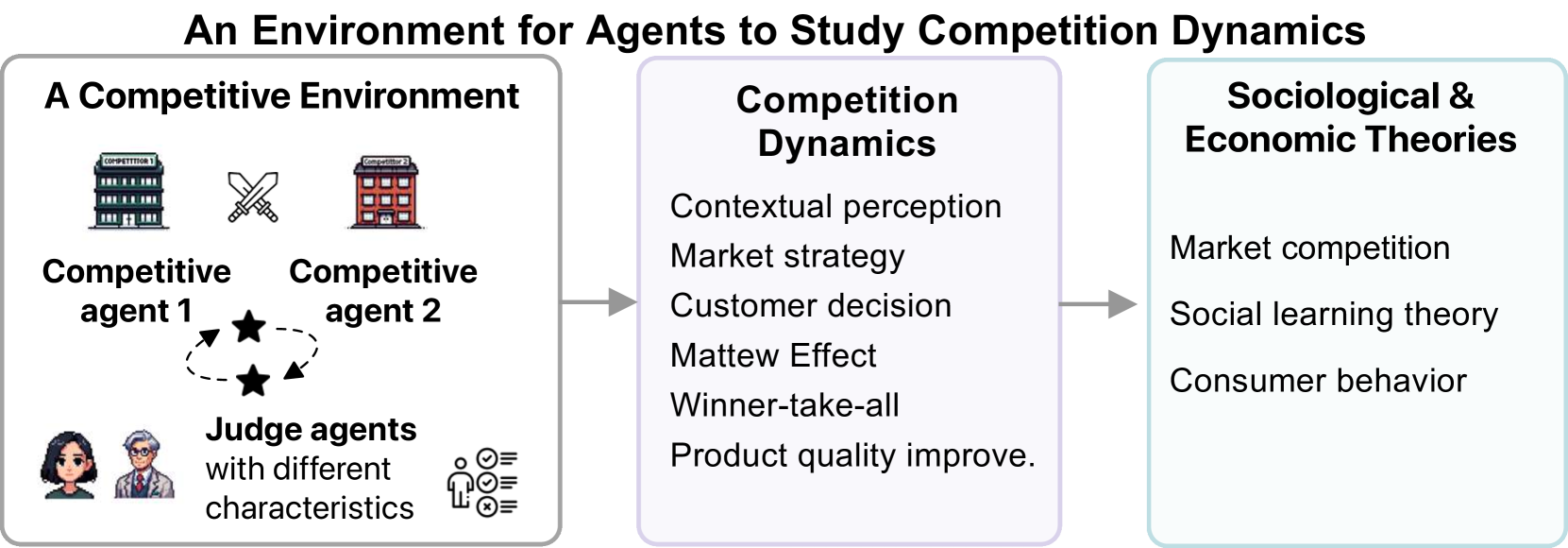
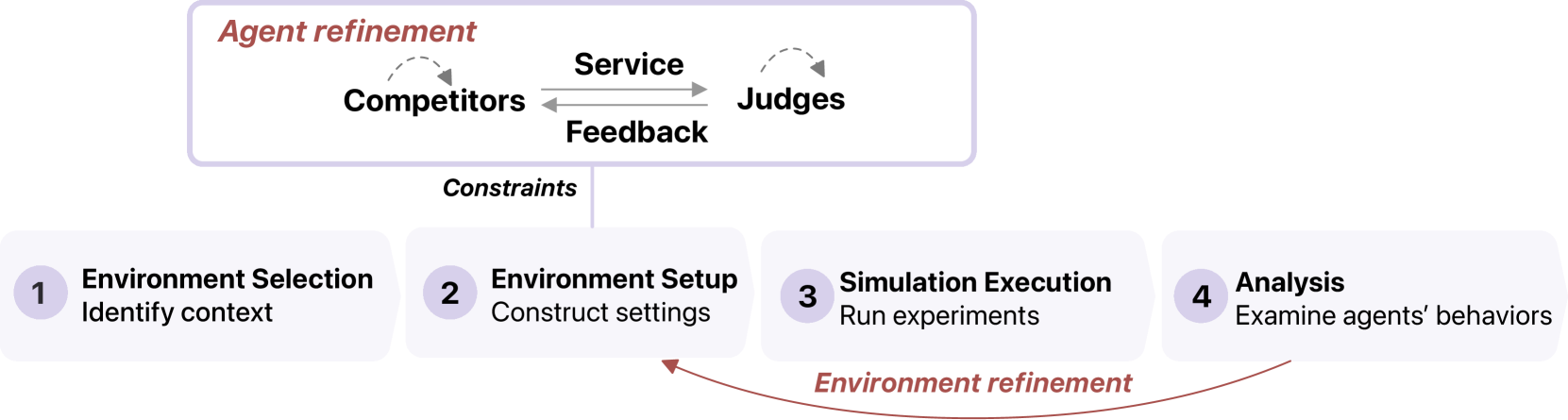
大型语言模型(LLMs)已广泛应用于完成各种任务,如个人助理或事件规划。尽管大多数研究集中在代理之间的合作与协作上,但对竞争这一促进社会和经济发展的重要机制的研究相对较少。本文旨在探讨LLM代理的竞争动态,首先提出一个通用框架用于研究代理之间的竞争。然后,利用GPT-4实现一个实际的竞争环境,模拟一个包含餐厅代理和顾客代理的虚拟城镇。餐厅代理之间竞争吸引顾客,竞争促使其转变,如培养新的经营策略。仿真实验揭示了微观和宏观层面的一些有趣发现,与现有市场和社会学理论高度一致。希望该框架和环境能够成为研究竞争的有前景的试验平台。
🔬 方法详解
问题定义:本文旨在解决对LLM代理之间竞争动态的理解不足,现有方法多聚焦于合作,缺乏对竞争的系统研究。
核心思路:提出一个通用框架和实际的竞争环境,通过模拟餐厅和顾客代理的互动,研究竞争如何影响代理行为和策略。
技术框架:整体架构包括两个主要模块:一是基于GPT-4的虚拟城镇环境,二是餐厅代理与顾客代理的互动机制,模拟竞争过程。
关键创新:最重要的创新在于将竞争机制引入LLM代理的研究中,提供了一个新的视角来理解社会动态,与现有的合作研究形成鲜明对比。
关键设计:在环境设计中,设置了不同的竞争参数和策略选择机制,确保餐厅代理能够根据顾客反馈调整经营策略,采用了适应性学习算法以优化代理行为。
🖼️ 关键图片
📊 实验亮点
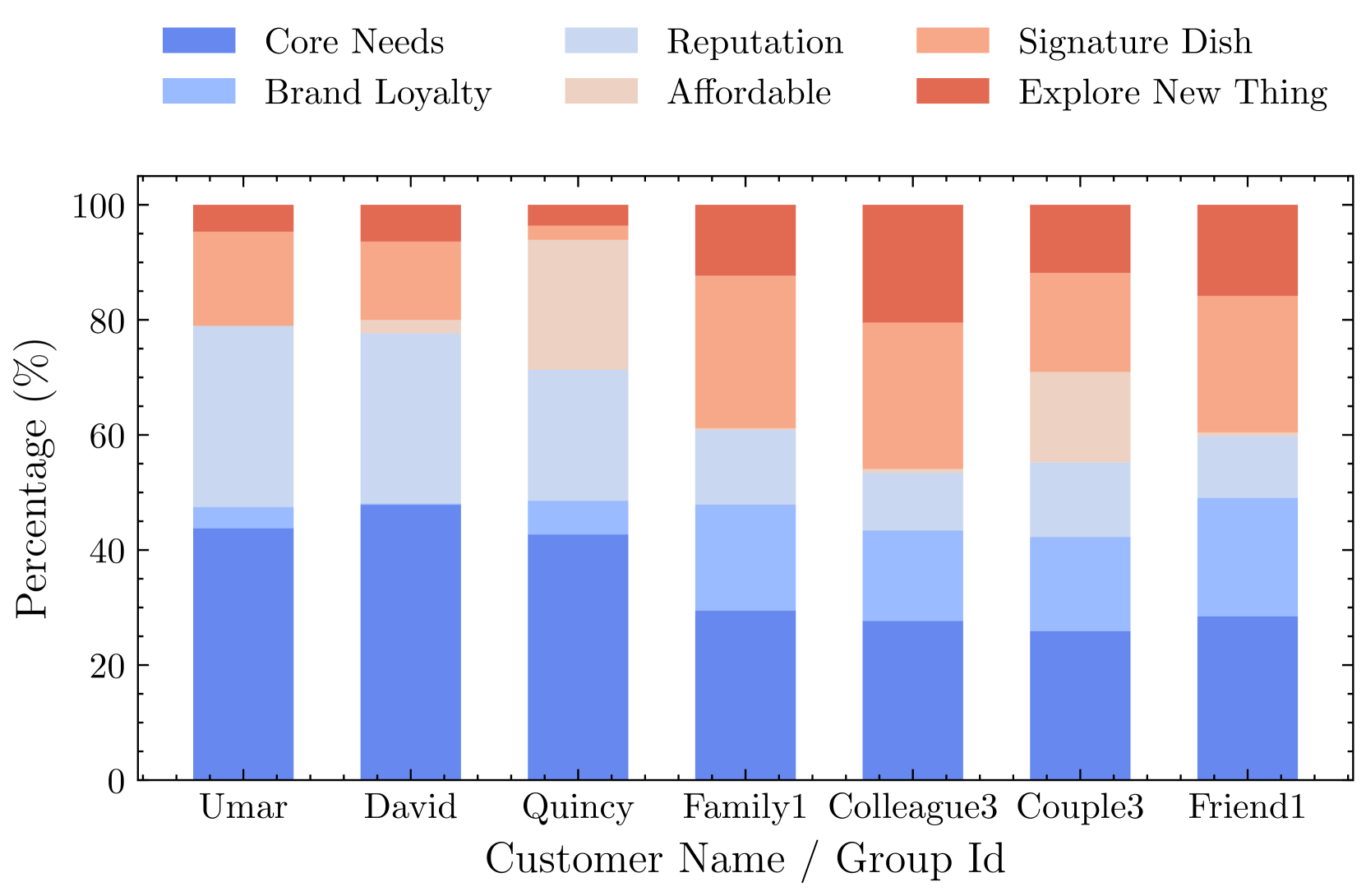
实验结果表明,餐厅代理在竞争环境中能够显著提升顾客吸引力,竞争促使其经营策略创新,微观层面上,顾客满意度提高了约20%,宏观层面上,市场活跃度提升了15%。这些发现与现有市场理论高度一致,验证了竞争对经济发展的重要性。
🎯 应用场景
该研究的潜在应用领域包括市场营销、智能代理系统和社会经济模型等。通过理解竞争动态,可以为企业制定更有效的市场策略提供理论支持,同时也为社会科学研究提供新的视角,促进对经济行为的深入分析。
📄 摘要(原文)
Large language models (LLMs) have been widely used as agents to complete different tasks, such as personal assistance or event planning. While most of the work has focused on cooperation and collaboration between agents, little work explores competition, another important mechanism that promotes the development of society and economy. In this paper, we seek to examine the competition dynamics in LLM-based agents. We first propose a general framework for studying the competition between agents. Then, we implement a practical competitive environment using GPT-4 to simulate a virtual town with two types of agents, restaurant agents and customer agents. Specifically, the restaurant agents compete with each other to attract more customers, where competition encourages them to transform, such as cultivating new operating strategies. Simulation experiments reveal several interesting findings at the micro and macro levels, which align well with existing market and sociological theories. We hope that the framework and environment can be a promising testbed to study competition that fosters understanding of society. Code is available at: https://github.com/microsoft/competeai.