Graph Agent: Explicit Reasoning Agent for Graphs
作者: Qinyong Wang, Zhenxiang Gao, Rong Xu
分类: cs.AI
发布日期: 2023-10-25
💡 一句话要点
提出Graph Agent以解决知识图谱推理的可解释性问题
🎯 匹配领域: 支柱九:具身大模型 (Embodied Foundation Models)
关键词: 知识图谱 图神经网络 推理模块 大型语言模型 可解释性 节点分类 链接预测
📋 核心要点
- 现有的图嵌入方法在可解释性和推理能力上存在不足,限制了其在复杂知识图谱推理任务中的应用。
- 本文提出的Graph Agent通过结合大型语言模型和推理模块,提供了一种新的图推理方法,增强了推理的可解释性。
- 实验结果表明,GA在多个数据集上达到了最先进的性能,展示了其在节点分类和链接预测任务中的显著优势。
📝 摘要(中文)
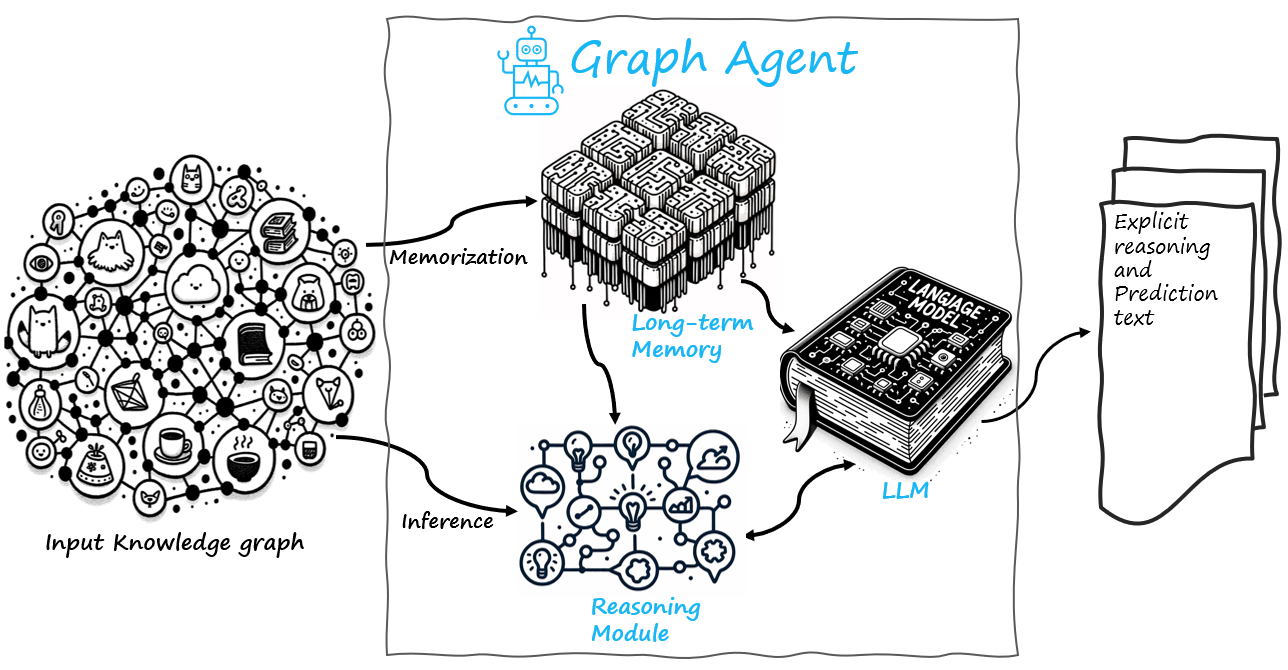
图嵌入方法如图神经网络(GNNs)和图变换器在知识图谱推理算法的发展中发挥了重要作用。然而,图嵌入方法缺乏可解释性和解释性,限制了其在需要明确推理的场景中的应用。本文提出了Graph Agent(GA),一种利用大型语言模型(LLMs)、归纳-演绎推理模块和长期记忆进行知识图谱推理任务的智能代理方法。GA结合了符号推理和现有图嵌入方法的特点,为复杂的图推理任务提供了一种创新的方法。通过将图结构转换为文本数据,GA使LLMs能够处理、推理并提供人类可解释的解释。GA在节点分类和链接预测任务上的有效性得到了评估,结果显示GA在Cora、PubMed和PrimeKG数据集上分别达到了90.65%、95.48%和89.32%的准确率,展示了其在显式推理能力、无训练和易于适应各种图推理任务方面的优势。
🔬 方法详解
问题定义:本文旨在解决知识图谱推理中的可解释性问题,现有的图嵌入方法如GNN和图变换器在推理时缺乏透明度,难以满足实际应用需求。
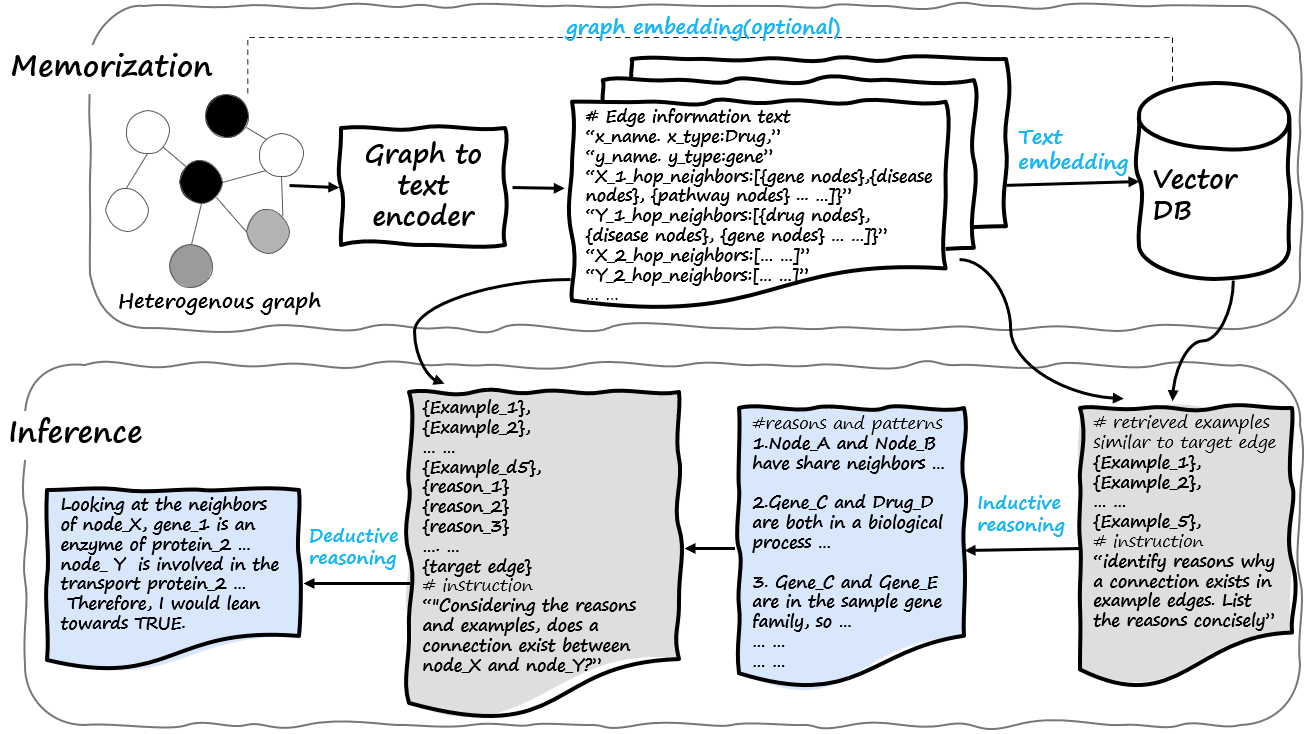
核心思路:Graph Agent(GA)通过将图结构转换为文本数据,利用大型语言模型进行推理,结合符号推理和图嵌入方法,提供了明确的推理过程和人类可理解的解释。
技术框架:GA的整体架构包括三个主要模块:大型语言模型(LLM)用于处理文本数据,归纳-演绎推理模块用于推理过程,长期记忆模块用于存储和检索知识。
关键创新:GA的核心创新在于将符号推理与图嵌入方法结合,形成了一种新的推理机制,使得推理过程不仅高效且具有可解释性,区别于传统的黑箱模型。
关键设计:GA在设计上采用了无训练的方式,减少了对数据的依赖,同时通过优化推理模块的参数设置和损失函数,提升了模型的适应性和准确性。
🖼️ 关键图片
📊 实验亮点
实验结果显示,Graph Agent在Cora、PubMed和PrimeKG数据集上的准确率分别达到了90.65%、95.48%和89.32%,超越了现有的GNN和变换器模型,展现了其在显式推理能力和适应性方面的显著优势。
🎯 应用场景
Graph Agent的潜在应用场景包括知识图谱的自动推理、智能问答系统、推荐系统等领域。其可解释性和高效性使其在需要透明推理的实际应用中具有重要价值,未来可能推动更多领域的智能决策与分析。
📄 摘要(原文)
Graph embedding methods such as Graph Neural Networks (GNNs) and Graph Transformers have contributed to the development of graph reasoning algorithms for various tasks on knowledge graphs. However, the lack of interpretability and explainability of graph embedding methods has limited their applicability in scenarios requiring explicit reasoning. In this paper, we introduce the Graph Agent (GA), an intelligent agent methodology of leveraging large language models (LLMs), inductive-deductive reasoning modules, and long-term memory for knowledge graph reasoning tasks. GA integrates aspects of symbolic reasoning and existing graph embedding methods to provide an innovative approach for complex graph reasoning tasks. By converting graph structures into textual data, GA enables LLMs to process, reason, and provide predictions alongside human-interpretable explanations. The effectiveness of the GA was evaluated on node classification and link prediction tasks. Results showed that GA reached state-of-the-art performance, demonstrating accuracy of 90.65%, 95.48%, and 89.32% on Cora, PubMed, and PrimeKG datasets, respectively. Compared to existing GNN and transformer models, GA offered advantages of explicit reasoning ability, free-of-training, easy adaption to various graph reasoning tasks