A Skin Microbiome Model with AMP interactions and Analysis of Quasi-Stability vs Stability in Population Dynamics
作者: Eléa Thibault Greugny, François Fages, Ovidiu Radulescu, Peter Szmolyan, Georgios Stamatas
分类: q-bio.QM, cs.AI, q-bio.TO
发布日期: 2023-10-23
备注: arXiv admin note: substantial text overlap with arXiv:2206.10221
💡 一句话要点
提出数学模型研究皮肤微生物群体动态与抗菌肽相互作用
🎯 匹配领域: 支柱八:物理动画 (Physics-based Animation)
关键词: 皮肤微生物群 数学模型 抗菌肽 生态动态 常微分方程 准稳定状态 生物群落
📋 核心要点
- 皮肤微生物群失衡与多种皮肤疾病相关,现有治疗方法效果不一,缺乏系统性理解。
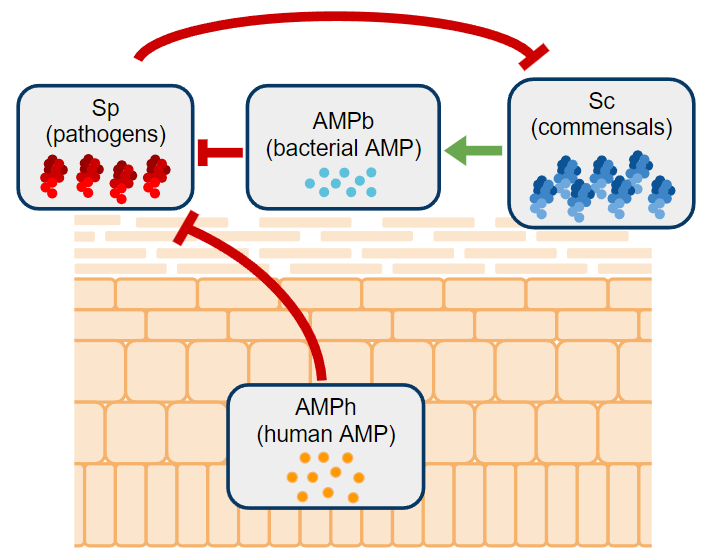
- 提出基于常微分方程的数学模型,分析皮肤共生菌与病原菌的相互作用及抗菌肽的影响。
- 模型通过参数优化和敏感性分析,揭示环境变化对微生物群落的影响及准稳定状态的存在。
📝 摘要(中文)
皮肤微生物群在维持健康皮肤中起着重要作用,由多种物种组成,彼此竞争资源并与皮肤细胞相互作用。微生物群失衡与多种皮肤疾病相关。本文提出基于常微分方程的数学模型,研究皮肤共生菌与机会性病原菌之间的相互作用,分析环境变化对微生物群落的影响。通过优化参数,模型预测皮肤表面pH升高会促进病原菌的定植,而抗菌肽的产生对微生物平衡有非线性影响。长时间模拟显示,模型在短期内达到的平衡可能是准稳定状态,随后可能转向反向稳定状态。该研究为微生物群体动态提供了新的视角。
🔬 方法详解
问题定义:本文旨在解决皮肤微生物群失衡及其对皮肤健康影响的复杂性,现有方法未能有效解释微生物群落的动态变化和治疗效果的差异。
核心思路:通过构建包含皮肤共生菌和机会性病原菌的数学模型,结合抗菌肽的生产,深入研究微生物群落的动态平衡及其对环境变化的响应。
技术框架:模型基于常微分方程,包含两个细菌种群,采用量化时序逻辑进行模型校准,进行全局参数优化和敏感性分析,分析不同时间尺度下的动态行为。
关键创新:通过减少模型参数数量,从13个降至5个,简化了模型的复杂性,同时揭示了准稳定状态的存在及其非典型特征,扩展了对微生物群体动态的理解。
关键设计:模型参数设置基于已发表的实验数据,采用非线性动力学分析方法,特别关注皮肤表面pH变化和抗菌肽的非线性效应,确保模型的准确性和实用性。
🖼️ 关键图片
📊 实验亮点
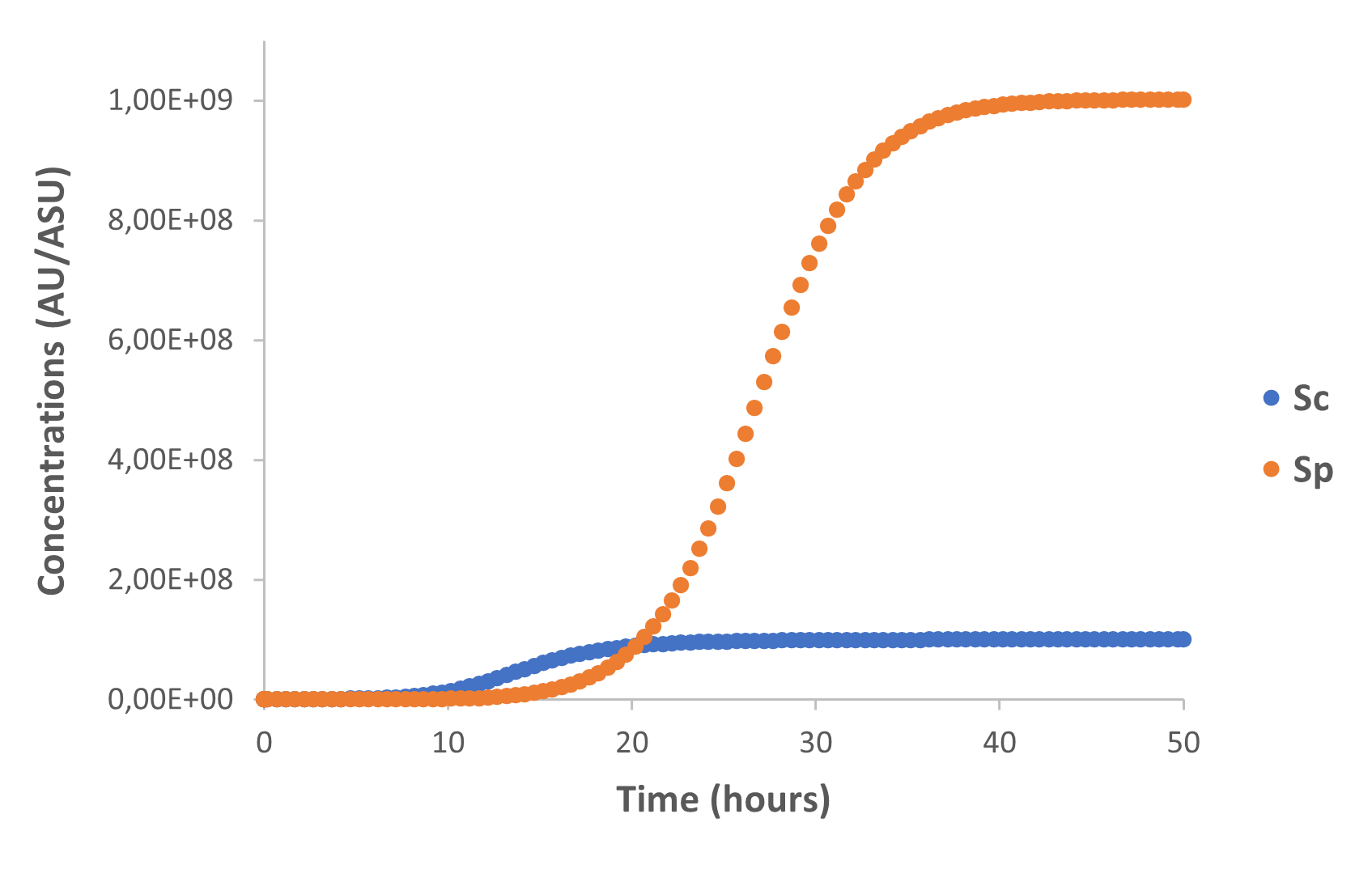
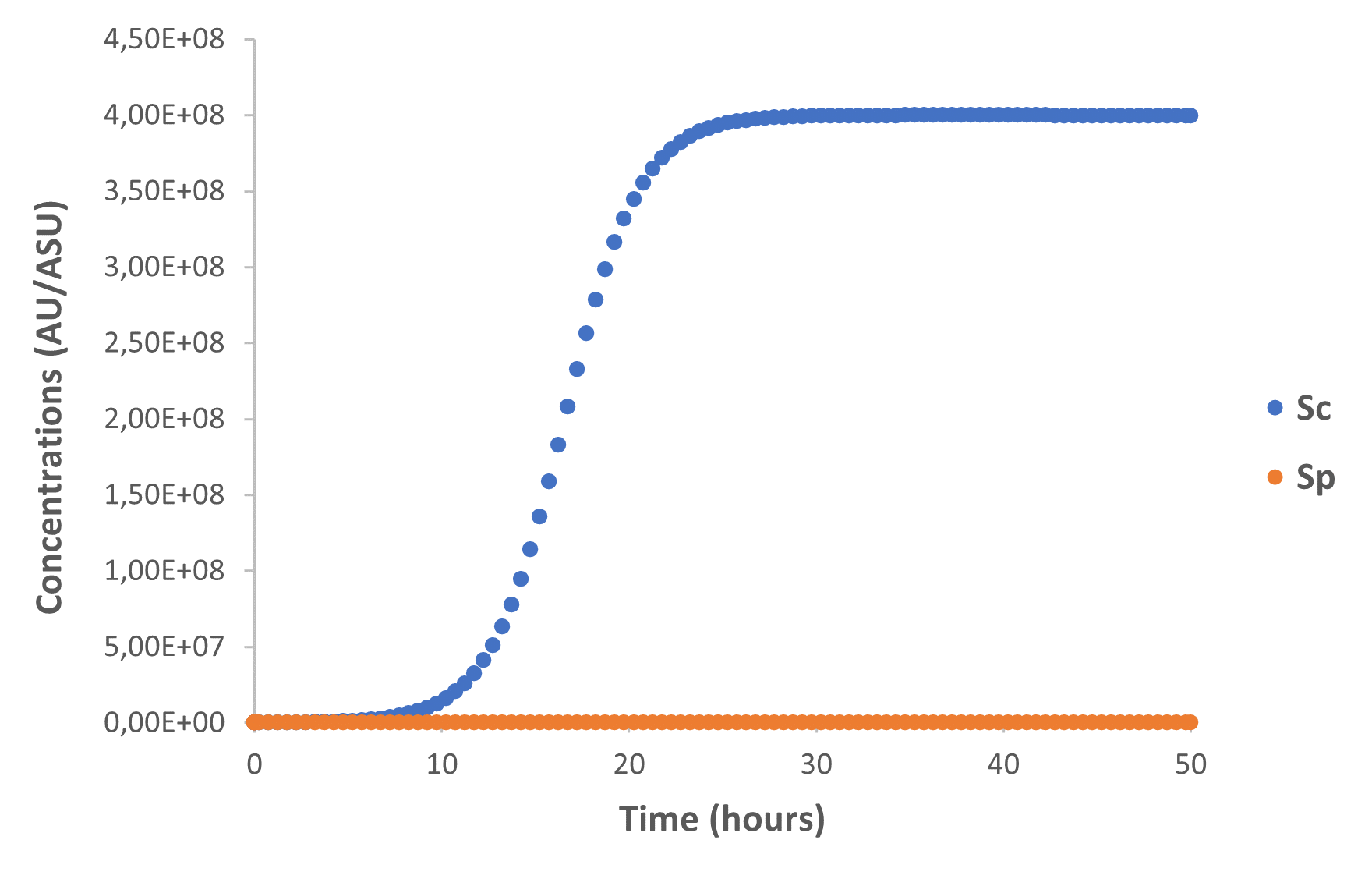
模型预测环境变化(如皮肤表面pH升高)会促进病原菌的定植,而抗菌肽的产生对微生物平衡有非线性影响。长时间模拟显示,短期内达到的平衡可能是准稳定状态,后续可转向反向稳定状态,提供了新的生态动态理解。
🎯 应用场景
该研究为皮肤微生物群的动态行为提供了新的数学模型,具有潜在的应用价值,能够帮助开发更有效的皮肤疾病治疗方案,改善皮肤健康管理。同时,该模型的分析方法也可推广至其他生态系统的研究。
📄 摘要(原文)
The skin microbiome plays an important role in the maintenance of a healthy skin. It is an ecosystem, composed of several species, competing for resources and interacting with the skin cells. Imbalance in the cutaneous microbiome, also called dysbiosis, has been correlated with several skin conditions, including acne and atopic dermatitis. Generally, dysbiosis is linked to colonization of the skin by a population of opportunistic pathogenic bacteria. Treatments consisting in non-specific elimination of cutaneous microflora have shown conflicting results. In this article, we introduce a mathematical model based on ordinary differential equations, with 2 types of bacteria populations (skin commensals and opportunistic pathogens) and including the production of antimicrobial peptides to study the mechanisms driving the dominance of one population over the other. By using published experimental data, assumed to correspond to the observation of stable states in our model, we reduce the number of parameters of the model from 13 to 5. We then use a formal specification in quantitative temporal logic to calibrate our model by global parameter optimization and perform sensitivity analyses. On the time scale of 2 days of the experiments, the model predicts that certain changes of the environment, like the elevation of skin surface pH, create favorable conditions for the emergence and colonization of the skin by the opportunistic pathogen population, while the production of human AMPs has non-linear effect on the balance between pathogens and commensals. Surprisingly, simulations on longer time scales reveal that the equilibrium reached around 2 days can in fact be a quasi-stable state followed by the reaching of a reversed stable state after 12 days or more. We analyse the conditions of quasi-stability observed in this model using tropical algebraic methods, and show their non-generic character in contrast to slow-fast systems. These conditions are then generalized to a large class of population dynamics models over any number of species.