Conceptual Framework for Autonomous Cognitive Entities
作者: David Shapiro, Wangfan Li, Manuel Delaflor, Carlos Toxtli
分类: cs.HC, cs.AI
发布日期: 2023-10-03 (更新: 2023-11-01)
备注: 34 pages, 12 figures
DOI: 10.13140/RG.2.2.14161.30569
💡 一句话要点
提出自主认知实体模型以提升机器独立性
🎯 匹配领域: 支柱九:具身大模型 (Embodied Foundation Models)
关键词: 自主认知 生成性人工智能 智能代理 多层次架构 任务执行 适应性系统
📋 核心要点
- 现有的智能代理系统在独立性和适应性方面存在不足,难以应对复杂的环境变化。
- 提出的ACE模型通过六个层次的架构,系统化地提升机器的自主决策能力和任务执行能力。
- 该框架在实际应用中经过测试,显示出显著的鲁棒性和灵活性,能够有效处理失败情况。
📝 摘要(中文)
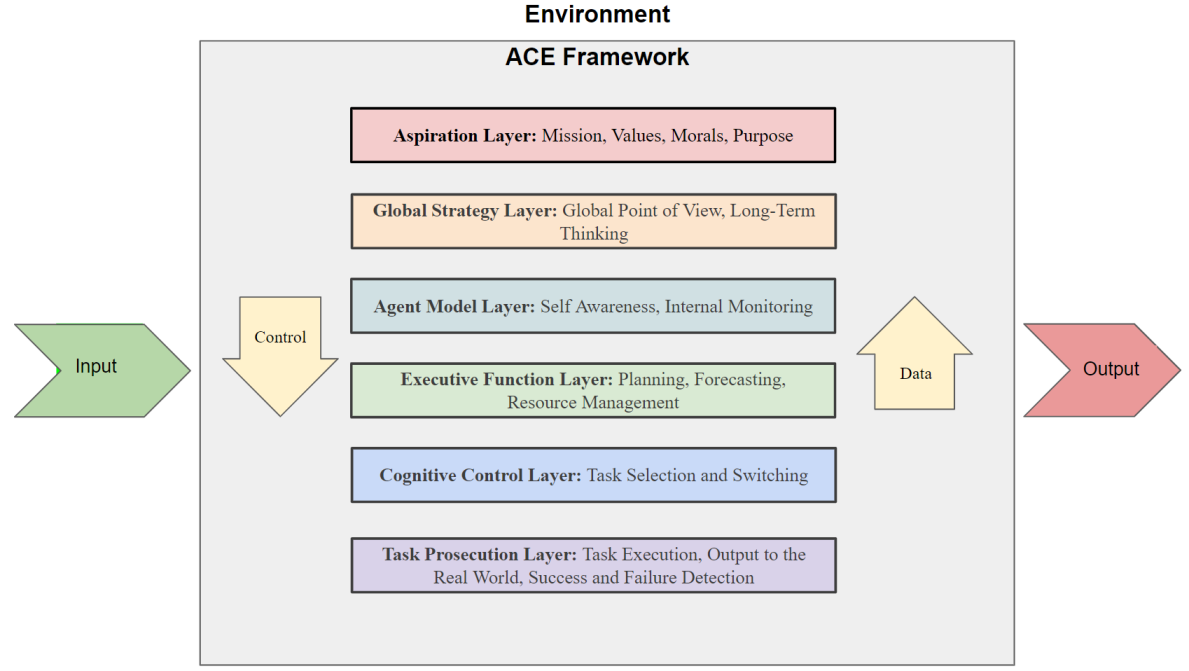
随着生成性人工智能(GAI)技术的快速发展,尤其是聊天机器人如ChatGPT和Claude的广泛应用,智能机器的兴趣显著增加。本文介绍了自主认知实体(ACE)模型,这是一种新颖的认知架构框架,旨在使机器和软件代理能够更独立地运作。ACE框架受到OSI模型的启发,呈现出多个抽象层次,以概念化人工认知架构。该模型旨在利用最新的生成性AI技术,包括大型语言模型(LLMs)和多模态生成模型(MMMs),构建自主的智能系统。ACE框架包含六个层次:愿景层、全球战略、代理模型、执行功能、认知控制和任务执行。每个层次在设定道德标准、战略思考到任务选择和执行中扮演不同角色。ACE框架还包含处理失败和适应行动的机制,从而增强自主代理的鲁棒性和灵活性。本文旨在使该框架更具可访问性。
🔬 方法详解
问题定义:本文旨在解决现有智能代理系统在独立性和适应性方面的不足,特别是在复杂环境中的决策和执行能力不足的问题。
核心思路:ACE模型通过引入六个层次的认知架构,系统化地提升机器的自主性,使其能够更好地进行任务选择和执行,同时具备应对失败的能力。
技术框架:ACE框架包含六个层次:愿景层、全球战略、代理模型、执行功能、认知控制和任务执行。每个层次都有其特定的功能,形成一个完整的认知系统。
关键创新:ACE框架的创新在于其多层次的设计,使得机器能够在道德、战略和执行层面上进行更复杂的决策,这与传统的单一层次模型有本质区别。
关键设计:在设计中,ACE框架强调了道德标准的设定、战略思考的引入以及任务执行的灵活性,具体的参数设置和损失函数设计尚未明确,但整体架构支持动态适应和学习。
🖼️ 关键图片
📊 实验亮点
在实际应用中,ACE框架显示出显著的性能提升,特别是在处理复杂任务和应对失败时的鲁棒性,具体的性能数据尚未披露,但相较于传统模型,适应性和灵活性有明显增强。
🎯 应用场景
该研究的潜在应用领域包括智能助手、自动驾驶、机器人等,能够在复杂环境中自主决策和执行任务,提升工作效率和安全性。未来,ACE框架可能推动更高级别的智能系统发展,使其在多种场景中更加灵活和可靠。
📄 摘要(原文)
The rapid development and adoption of Generative AI (GAI) technology in the form of chatbots such as ChatGPT and Claude has greatly increased interest in agentic machines. This paper introduces the Autonomous Cognitive Entity (ACE) model, a novel framework for a cognitive architecture, enabling machines and software agents to operate more independently. Drawing inspiration from the OSI model, the ACE framework presents layers of abstraction to conceptualize artificial cognitive architectures. The model is designed to harness the capabilities of the latest generative AI technologies, including large language models (LLMs) and multimodal generative models (MMMs), to build autonomous, agentic systems. The ACE framework comprises six layers: the Aspirational Layer, Global Strategy, Agent Model, Executive Function, Cognitive Control, and Task Prosecution. Each layer plays a distinct role, ranging from setting the moral compass and strategic thinking to task selection and execution. The ACE framework also incorporates mechanisms for handling failures and adapting actions, thereby enhancing the robustness and flexibility of autonomous agents. This paper introduces the conceptual framework and proposes implementation strategies that have been tested and observed in industry. The goal of this paper is to formalize this framework so as to be more accessible.